NOTE:
SAFARI seems to no longer work
for comments...use another browser?
Showing posts with label The Throne of Psyche. Show all posts

Sunday, March 25, 2018

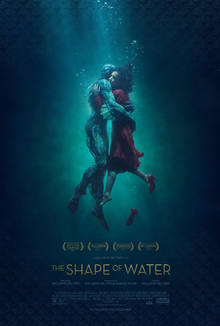
Fiddling with Water

By Source, Fair use,
https://en.wikipedia.org/w/index.php?curid=54631984
I've never tried screen-writing (probably poems, stories, novels, and some nonfiction are quite enough), but a movie often makes me think about how I would write its story differently, even when it is hung with glittering nominations and awards. For example, The Shape of Water was a stylish, often ravishing-looking piece, a lovely Marvellian "green thought in a green shade," but I found myself wanting to tinker with its pieces: I wanted more transformation, metamorphosis, change. Such fiddling, of course, is none of my business, but who can stop a writer from playing with words and stories?

Obviously del Toro's tale (screenplay by Guillermo del Toro and Vanessa Taylor) was indebted, among other sources, to the fairy tale of Beauty and the Beast, which in turn springs beautifully from the ancient Greek myth of the perfectly married body and soul, or Eros (Cupid or Amor) and his beloved, Psyche (Anima.) Portrayals of Eros and Psyche go back to the fourth century B. C. in Greece. (Apuleuis wrote the first full narrative of their story in Latin.)

And so I end up considering The Shape of Water in the light of Eros and Psyche, a story of metamorphosis, of a woman gaining strength as she passed through many trials, of two impossibly-different (one a winged god, one an earthly princess) strangers finding sacred union and giving birth to their child, Pleasure. Through her many tasks and her difficult journey to the Underworld, Psyche becomes more than she was, and at last she wins immortality and becomes the equal of Eros. Eros and Psyche has always been a story of the achievement of wholeness, and through the centuries it has been popular and multivalent, giving rise to varied and rich meanings. I played with the story some years ago in The Throne of Psyche, so I am guilty of adding to that heap of meanings.

Alphonese Legros, Cupid and Psyche (1867)
Public Domain / Wikipedia / Google Art Project


Toying, tinkering with a shape of water

What if the amphibian-with-powers was also, like the Greek god Eros, more complex, more human in his acts? That is, what if he appeared to have a soul, so that Elisa's discovery of his worth appeared more powerful?

What if he refrained from slashing flesh, munching on Giles's cats, and murdering those who do not understand what he is? (As is, it's a possibility that Strickland's harsh, cartoon view is a bit more accurate than the viewer would like--after all, the Amazonian fish-man repeatedly chooses to be violent, even though he is shown as powerful enough to make other choices.)

What if the amphibian lover performed a redemptive, possibly transformative act at the close, giving life and change (redemption? a speck or a peck of penitence?) to Strickland rather than simply killing a baddie drawn too firmly in cardboard? What if Strickland was transformed from something less to something more, and in the process the creature was also elevated to something more in Elisa's mind and in our minds?

The close gives us the pattern of death and resurrection, but the Amazonian is no god for Easter--he's a god for sex and death and a happily-ever-after we had better not examine too closely. For like Psyche, Elisa meets death and is changed somewhat (gills! whether brand new or simply opened because she was already part fish), but it's hard to puzzle out how she and her amphibian love will keep house together underwater in the Amazon.

What if, like Psyche, Elisa had a more complicated relationship with her lover, one that further developed the idea that she is fearful but learning who and what he is, that gave her uncertainty when others were fearful for her, and that showed her changing (in more than gills) to pursue her love?

What if the story was a kind of Eros and Psyche story without side tales that hammered home obvious messages about the patriarchy and How Bad and Illiberal American White People Especially Men Were Not So Long Ago (but now at least we who chose to see the movie are good and love everybody, even Amazonian monsters)? What if the movie didn't pat us on the back in this manner? What if the story didn't tell us how much better we viewers are now than people were before but made us long for our own transformation into something more beautiful and human?

What if...


Note: One of my favorite pieces about Guillermo del Toro is The New Yorker feature by Daniel Zalewski. See it here. And I would like to see a del Toro version of Lovecraft's At the Mountains of Madness...

Note no. 2: Maybe it's time to re-watch Pan's Labyrinth. And here's a documentary about the Pale Man, the Faun, the toad, and the stick-insect fairies.

Wednesday, August 02, 2017

Linkfest: some poems online

Images from three in-print poetry books--
The Throne of Psyche,
Thaliad
,
and The Foliate Head.
All art by Clive Hicks-Jenkins.

I have added about 150 links to poems online on the stories-and-poems page. Some are poems or excerpts from published books--Claire (LSU), The Throne of Psyche (Mercer), The Foliate Head (UK: Stanza), and Thaliad (Montreal: Phoenicia)--and others are from future books, including a good many poems from The Book of the Red King. Some of them are not final versions, having been tweaked before they found a home in a book.

Thanks to Clive Hicks-Jenkins and three wonderful designers--Andrew Wakelin of Wales for The Foliate Head, Mary-Frances Glover Burt of Atlanta for The Throne of Psyche, and Elizabeth Adams for Thaliad--the books are beautiful. Good to have and to hold and to read.

Wednesday, January 18, 2017

Precipitous slippage

Once upon a time I was a new-made Associate Professor with tenure; my answer to that lovely promotion was to quit academia entirely because I wanted to be a poet and novelist, not an academic poet and novelist. I felt that I would be a stronger, better writer outside the land of ivory towers. What I did not grasp at the time was how completely the academy would take over the world of writing, particularly the realm of poetry, and make it into a near-monolithic enterprise. (Simultaneously, both poetry and literary fiction began to move toward being minor arts--well, poetry was already on the way.) This change has meant that academic writers support one another and give one another various helpful privileges.

Those of us outside the academy are somewhat in the cold, particularly if--as I do--the writer believes that the diminishing returns of Modernism are upon us, and that the way forward is back through tradition and form. Free verse and an obsession with originality (I don't see how that works, given that we're more than a century past modernism's birth--Modernism hasn't been modern for a long time) have become a kind of ideology in our university system. A large number of journals are associated with colleges or are founded by MFA graduates. Most of these are primarily interested in free verse. Meanwhile, I am not primarily interested in free verse, although I do have a recently-finished collection containing poems that derive from a foreign chant tradition that looks free but contains many rhetorical flourishes allied to that tradition.

Do I regret my decision about leaving the academy? No, I don't. I am a better writer because of that choice, and I also had the luxury of having three children, which I probably could not have managed if I had stayed in college settings as a writer and teacher. I find that it is hard to do three major things well, but two--well, you can give up a lot of things that are enjoyable but not essential and so make two big callings work.

I still have a few writer friends who are in the academy and make their living there; I think it's fine that they made the choice to stay in. Most people who gain a perch there do, after all. I just think that I made the right choice for me. What else can we do but try to make right choices? I admire people like poet-professor-mother Luisa Igloria who grasp after mastery in three realms. The late Doris Betts (professor, dean, writer, mother) comes to mind among novelists.

We live in a time when very few poetry books sell in reasonable numbers. I've talked to various editors about sales and found that some poetry books don't break the 50-mark. That's pretty sad, isn't it? I hear that Copper Canyon books sometimes make it to 600; those are the sorts of little numbers a poetry press depends on. (The funny thing about a poetry book is that it can become the sort of book that you return to again and again. So in that way it's a better bargain than most books.)

My picture of how my own poetry books are doing is a bit fuzzy. I know that Thaliad continues to trickle (or seep, maybe!) along in sales for Beth Adams's Phoenicia Publishing and is heading toward the 400-mark in combined paperback/hardcover. [Update: I was pleasantly wrong! 425 copies so far, as of January 19th.] The Foliate Head has sold out its first and second hardcover printings at UK's Stanza Press, though there are still a few copies available on line. I'm don't know the paperback or hardcover numbers at Mercer for The Throne of Psyche. Those are my three books that can be called "in print," though The Foliate Head is technically out of print.

Interior illustration by Clive Hicks-Jenkins
for The Foliate Head
If you care about poetry, please consider buying books. While I would like you to support mine, I tend to be pleased when I see anybody buy a good poetry book. And I always remember the quote taped up on the poetry shelves at the Bull's Head Bookshop (UNC-Chapel Hill shop, now defunct) run by novelist Erica Eisdorfer: People who say they love poetry and never buy any are cheap sons of bitches. --Kenneth Rexroth. It's not polite, but it gets at something. I just looked it up online and found a different version that says, I’ve had it with these cheap sons of bitches who claim they love poetry but never buy a book. Maybe both are right, as Rexroth didn't hold back and may have been muttering variations on the theme for years!

Yes, poetry is rapidly losing its status. Yes, what was once an important art is now a minor one and in danger of going the way of lacemaking. Times change. Television and internet make inroads; well, that's just how it is, we say. What we add to culture changes culture.

But if you care about poetry, do more. In fact, all of us need to support what we love in a time when what is seen and praised and supported is heavily-marketed, commercially-validated books, film, visual arts, etc. And we need to remind ourselves over and over again that we can choose. We can choose roads less taken. It will make all the difference.

Friday, May 06, 2016

Dolls are strange


Poem by, well, me.
From The Throne of Psyche. Mercer, 2011.
Video by Paul Digby.
What a quirky thing!

Friday, April 08, 2016

A Throne in April


April is poetry month: I've already posted about special April sales for The Foliate Head (Stanza Press, and now the second printing is out of print) and Thaliad (Phoenicia Publishing), and thought that I should add a post for The Throne of Psyche, still in print in both hardcover and paperback from Mercer University Press. Both versions are handsome books; the hardcover won an Abby design award for Mary-Frances Glover Burt and the company of Burt and Burt. The cover image on both hardcover and paperback is by Clive Hicks-Jenkins.

At various times I've posted copies of poems, and so here's a little batch of samples from the book. The collection runs to more than a hundred pages, so this is just a snip:

originally published in Mezzo Cammin,
from the title poem

*

A Fire in Ice (riposte to Billy Collins)
originally published in The Raintown Review
*
originally published in storySouth
*
originally in Mezzo Cammin

originally in The HyperTexts

*
originally in Mezzo Cammin
*

Tears of a Boy, Age Six

originally in Books and Culture

A Child at the Tropic Pavilions
originally in Mythic Passages

In Extremis
originally in storySouth

Saturday, April 25, 2015

NPM5: I give you sphinx and snow cats--

April, national poetry month, no. 5

Here's one I may have posted before--certainly I have posted Paul Digby's video of the poem earlier. It's an iambic tetrameter poem in couplets, so it resolutely rejoices in rhythm and rhyme. I thought of this one because I read it at the Fenimore Art Museum on Monday, and somehow people always think it very funny that a poem should reprove a popular poet for removing Emily Dickinson's clothes. All those tiny buttons...

The poem appeared in TheThrone of Psyche (Mercer, 2011), available in hardcover and paperback. Both have a cover drawn from a detail of a Clive Hicks-Jenkins painting, and beautiful design by Mary-Frances Glover Burt. It was originally published in an issue of Raintown Review guest edited by Joseph Salemi.

***

FIRE IN ICE
A riposte to Billy Collins, “Taking Off Emily Dickinson’s Clothes” 


Don’t think because her words are wild
That Dickinson’s a sylphine child

For your undressings—don’t rend the haze
Of veils that shields you from her blaze.

Her hands are capable and know
The ways of burning—how sparks blow

When flames are jostled by a bold
Adept, her fingers tipped with cold.

And though in after-hours she threads
The dew she plucks from spiderwebs,

Or answers Who? to midnight’s owls,
Or strokes the cats, returned from prowls—

Or takes to skipping to and fro
With moonlit maidens made of snow,

She’ll freeze, inviolate and meek,
If you so much as try to speak.

Shove off—avoid those brazen wings:
She’s not for your unbuttonings.

The polished stone above her head
Declares her state among the dead:

Here waits that sphinx whose secret power
In riddles found her finest flower.

***

Here is Paul Digby's video of the poem. You may find seven of his videos of my poems here.

Thursday, April 23, 2015

NPR3: I give you the feathered snake--

Jacket art, detail from Clive Hicks-Jenkins
Design by Mary-Frances Glover Burt
April, national poetry month, 3

Here's a blank verse passage from the title poem of The Throne of Psyche (Mercer, 2011.) We've had harpies and grief for April-the-cruelest-month in the first two selections; here is Eros bedding Psyche, love and the soul forcibly entwined.

Available in hardcover and paperback. Originally published in Mezzo Cammin.

III. THE MARRIAGE BED

And if the palace seemed bewitching, how
Much more the bed, a marvel of the gods—
Like nothing for an earthly king and queen,
A lustrous treasure box packed up in silks,
Four-legged, each leg a tree of ebony.
As shadows slid across the windowsills,
Collecting in the corners of the room,
The trees began to send out wands and leaves,
Darkening the air with gleaming branches.
Whoever saw such freedom from the laws
Of earth? I stared, forgot to tremble in
My wonder as new tendrils wove a maze
Above a bed that glistened, beetle-black.
Unseen hands drew dusk across the portal
And windows, carried off the glowing lamp,
And strewed fresh petals on the inlaid floor.
If this was how my promised husband’s house
Received his bride, perhaps the feathered snake
—for so Apollo’s oracle foretold—
Could be more beautiful than I had dreamed,
If flying terror could be beautiful.
Shade took the room until I could not see.
A mimic springtime blossomed on each branch
As tiny stars shone out, began to crawl
And sometimes blink like phosphorescent bugs.

I fell asleep and shinned the olive tree
That waxed inside my mother’s garden walls
And heard a crinkling of the leaves that spoke
Oracular to me of love and fate,
But where was dream and where the waking world
I hardly knew, and when the feathered snake
Came wooing with eternal promises,
I let him hold me in his arms that seemed
More like a man’s than like a serpent’s grasp.
Yet fear is strange: at times he seemed all scales
That snagged against the linen of my gown,
At times he seemed as yielding as a child.
I woke to find that what I dreamed was true—
The rustle of his wings was like the leaves,
The arms that pinned me close were like a man’s,
Although no man could emanate such fire,
A darkness glowing in the chamber’s pitch.
But what did I, long sheltered in my home,
Know of the ways of monsters or of men?
A tree of nerves sprang into trembling life
Inside this body that the world desired
But never knew—the starry insects swarmed
Among the maze of limbs and multiplied
Until the dark was pricked with flecks of light
That gave no seeing to my open eyes.
The snake kept winding on the tree of me—
I flashed with nervous fire from root to leaf
And shivered as my gown was tugged aside.
A rush of wood: new saplings broke the floor
And forested the chamber, wild with growth.
The room dissolved as floor was changed to earth
And roof transformed to sky and swarming stars.
In midnight’s wilderness my lover struck
Asunder all my childhood’s innocence—
The little stars went shrieking through the wood
As jet-black trees contracted, splintered, fell.

I lay within a nest of shattered twigs.
A shape with wings was sobbing on my breast,
Some wall between us battered down to dust.
I touched the face invisible to me.
His serpent pinions beat convulsively.

Tuesday, April 01, 2014

Up in the writing room--

Mary Boxley Bullington, Avian Adventures
over a Barbarous Land
. Acrylic and mixed
media 
collage, 22" x 22 1/2". Available.
If you don't know her work, go find her

on facebook. Mary's work is fluent and powered. 
by a great sluice of passion. I recommend it!
Labyrinthine tangles, or what's coming up in the writing room--

Although I have had Maze of Blood at the publishers for a year or two, accepted as was, I nevertheless got the wild wire to revised it and change the order around entirely. This is clearly madness but is now underway. We (me and my mad alter ego) hope it is a fruitful madness. I am going to spend some time getting my drifts of manuscripts into order this year. I have been saying that I would tweak The Aerenghast Game (a children's 3-in-1 novel) and send it out for some years, and I am now saying it again. Also, I must send out The Book of the Red King, which has been sitting around, retting in a flax pond, and needs only a mild scutching and hackling, or swingling, or something. Then I have to get some of these untidy heaps of poems in some kind of order. Best of all, I have an idea for a novel that I am just a wee bit nuts about--if I can only find time (or a maid and secretary, plus a chauffeur for child no. 3. Don't all volunteer at once--stampedes can be dangerous.)

Mary Boxley Bullington, Come Dog Days, Snake
Makes his Get-Away.
Acrylic, gesso, India
ink on 
paper, 19" x 22." All paintings 

shown here are available for purchase... 
Glimmerglass, trala,
is next up on the publication schedule. Please check out the tab above. The muse. The house in the hill. Labyrinths. Somnium. Love and dangers. And more art by Clive Hicks-Jenkins. Of course!

Note to moguls, moles, gulls, etc.--

You know, having the teensiest little fannish mention in Entertainment Weekly really moved some books--some out of print books, that is, particularly Catherwood and the two Adantis books. What I'd really like is for all you Hollywood types with bags of money to go purchase some of my in-print books. They make grand gifts. Y'all hear? That means the books on the tabs above that say 2011 or 2012... People who like to fantasize about such things tell me that A Death at the White Camellia Orphanage and Thaliad would make great movies. I'm always surprised when they say it about Thaliad because it's a long blank verse adventure! That's like making something like--oh, I don't know--Beowulf into a movie. Only with more adventures and female roles. I don't ever fantasize about anything happening to my books because that way leads an unpleasant kind of madness (as opposed to a Maze-of-Blood-retweaking kind of madness!) P. S. You never know, a lyric poem or narrative might be a good movie--better pick up The Foliate Head and The Throne of Psyche while you're at it!  (✿◠‿◠)


Mary Boxley Bullington, Only Last April.
Acrylic, gesso, oil pastel, India ink,
watercolor 
and collage on rag paper,
22" x 22." Available for purchase.

My reading

I've been very busy and so am listening to some books this week, which I find is a challenge--I'm too used to being able to back up a paragraph and reread... But in this pellmell way I have just finished Chesterton's A Short History of England and am now listening to Ruskin's Lectures on Landscape.

April Fool's Day

No tricks this year--I am my own April Fool, and the closest I come here is the fantastic idea of moguls reading my blog! Happy day, all who tilt--as I do--with their own foolishness.

Mary Boxley Bullington, open studio day, Roanoke

Saturday, March 22, 2014

Updatery, with owl

Clive Hicks-Jenkins vignette,
a sweet owl for Glimmerglass
I posted this one last week and then took it down after half an hour, dithering over whether it was too much about my books, my books, my books. But I've decided that if you come here, you know I write books. So now the post is up again for the weekend. If that does not please you, fly on to posts about writing and music, the passing of Lucius Shephard, green men in cathedrals, the word police, Catherwood in Entertainment Weekly, and much more...
As I haven't talked much about my books lately, I'm cobbling together a post that will link to some of Clive Hicks-Jenkins's recent work for the fall novel, Glimmerglass, and update links and news a bit about my three 2012 books.

A Death at the White Camellia Orphanage
Update on my A Death at the White Camellia Orphanage page here.

Sample review clip: It is seldom that a novel from a small university press can compete with the offerings from the big houses in New York. A Death at the White Camellia Orphanage may be the best novel this reviewer has read this year. Its quality and story-telling remind one of The Adventures of Roderick Random, Great Expectation and The Grapes of Wrath among others. The winner of the 2012 "Ferrol Sams Award for Fiction," A Death has the potential to become a classic American picaresque novel. / One wishes, however, that this novel will not get shunted into the regional box and be seen only as a Southern novel. Its themes and the power of its language, the forceful flow of its storyline and its characters have earned the right to a broad national audience. 30 July 2012 John M. Formy-Duval at About.com


Glimmerglass (September, 2014)
Clive Hicks-Jenkins on twinship with his work for Glimmerglass here.
"Marly and Me" post from Clive here.
Glimmerglass decorations in progress here.
More Glimmerglass vignettes here.
Excerpt from a blurb by Jeffery Beam: Whether she’s writing historical fiction or fantasy, her characters leave one breathless. Her ability to describe a person, a place, or the psychological underpinnings of a plot or individual, ranks with the great novelists, the highest literature.  A tale of love and intrigue, mystery and pathology, Glimmerglass’ appeal is the warmth and charge of a tale told round a fire fused by Hitchcockian anxiety, empathy, and relief.  Nature, architecture, dread, thrill, sexual dilemma, and murder echo against Youmans’ gorgeous prose and terrifying romance, which glides like a serpent―without a single extraneous or boring word.

Thaliad
And here's a little focus on Thaliad, borrowed from Midori Snyder's wonderful blog, In the Labyrinth

Marly Youmans' Thaliad offers a healing balm to the swath of nihilistic post-apocalyptic fiction... Told in free verse reminiscent of heroic epics (Homer meets Gerald Manley Hopkins), Thaliad recounts the aftermath of a fiery apocalypse and the perlious journey of a band of children led by a girl whose prophetic visions guide them to a sanctuary on the edge of a lake. Here, they confront the challenges of re-creating the world – a world illuminated by hope and love.
...this a wondrous text filled with richly layered and evocative poetry, packed with fairy tale and mythic references. Like a bardic tale, it demands to be read aloud.
Nature along the road appears rotted and ruined by violence, the sky is thick with ash and poisonous rain drops of quicksilver. But Nature at the sanctuary along the lake where Thalia's visions have led them is fertile, sensual, a source of healing. Here is the spring pollen, ripening even as the children are, who seven years later have become young adults:
"...Clouding the air with fertile shining silt
That somersaulted in a beam of sun,
That changed the spiderwebs to something rich,
That kissed the surfaces of Glimmerglass
And turned its scalloped border into gold,
That moved across the air as if alive,
The landscape's bright epithalamion,
The simple golden wedding of the world."
Violence is hammered into fierce staccato rhythms -- the beating of swords and young men made mad with battle lust.
"...Close-pressed, crashing, the fell clamor of shields,
The crossroads, grand climateric of blood,
Jar of womb-shattered, the rib-comb unteethed,
Janglings above corpse couch, red butcher bed,
The bronze swords wading in a swamp of flesh
Like toddlers splashing in a muddy slough,
Hell-scathers scraping blade along the bone,
Blood-spree, blood-spore rose red on snow-white yard....

...To the hour when Cain is ever slaying
Abel in the dark eternal backward."
Balanced against the terrifying darkness and the fire's destruction are Thalia's prophetic visions, soaring with heat and golden light as the human spirit is nurtured by the divine. In an abandoned Church a grieving Thalia confronts an angel, its blasted face open to the pouring of sunlight behind it:
"...The sunshine made a starburst where the head
Once shone, auroral work of Tiffany;
The star face brought a lightening of flesh
To Thalia until the piercing rays
Transformed her body into starriness,
And rain of light made reign of light within,
Till she was drowned and nameless in its flood,
And there with trembling let the angel speak..."
Thaliad has two narrators -- Emma, the librarian who almost seventy years after the fire reflects on the history of the Clave, the settlement founded by Thalia, and then Emma as the storyteller, the bard who recounts the perilous journey through the devastated land, Thalia's determination to follow her visions, and the lives of the children as they struggle to survive. Though we are not spared their hardships and grief, through the storyteller’s voice we have confidence in our destination—it is this commitment to the angels of our better nature and Marly's sublime poetry that gives Thalid its power to inspire hope out of fear and love out of hate.
I also must mention that the book will be gorgeous as Marly has collaborated again with Welsh artist Clive Hicks-Jenkins who has created the cover art (which I love) and a lot of beautiful interior art. Head to Phoenicia Press (a small indie press in Montreal)...

And here's tiny poem from The Foliate Head, which has has gone into second printing in the UK. The book is easily available in Europe via bookstores or direct purchase from Stanza Press, and in the U.S. via Amazon or the Amazon "extended" program for booksellers or, again, direct purchase from the press. It's doing fine (for a book of poetry!) but I'd love to have more readers on this continent.

The Substance

Fine as a ring-stole drawn through a hoop
Of gold, but crimped and burned
And almost ruined by some fire
Long ago, far away—
Glimmering like abalone,
Moody and beautiful.

Some things persist as mystery,
No matter how we seek
A raveling, no matter how
We vaunt, no matter how—
Slanting above our lifted faces
Like rain shot through by sun.

And I shouldn't forget
The Throne of Psyche, 2011
What I'm reading: Albert, Leonora Carrington: Surrealism, Alchemy and Art; Leithart, Deep Exegesis. I'm also skipping about, reading various poets, and also reading Patrick Kurp's poetry reviews at The Quarterly Conversation (scroll down the page for an index to his pieces), on the hunt for new reading in the realm of poetry. And I've started a number of novels but thrown them out the metaphorical window, alas.

Elsewhere


  • Glimmerglass (tumblr)
  • Marly on Facebook
  • Marly on Twitter
  • Marly at Scribd
  • Marly on YouTube
  • Marly at Pinterest
  • The Lydian Stones
  • Marly at Goodreads
  • Marly on LinkedIn
  • Marly on Google+
  • Monday, February 24, 2014

    A Child at the Tropic Pavilions


    A CHILD AT THE TROPIC PAVILIONS


    The smolderings of Pele’s hair
        Are her delight, with fires
    Of eucalyptus in the rain
        And coral’s glowing spires.

    A  braided crown of palm adorns
        Her buoyant curls, and leis
    Of frangipani scent her throat:
        She has no need of praise,

    For sea’s auroral whisperings
        Aren’t secrets to her ear--
    Her counselors with gaudy wings
        Suddenly appear

    To sing of castles made of sand
        And childish dignity
    That takes the throne in Chinese silk,
        With parrots on each knee.


                            for Rebecca Beatrice Miller

    Sunday, December 08, 2013

    The in-print shelf--

    I'll be back with at least one more post about friends with Etsy shops, since it's a time of year when friends in the arts could use some Lady Word of Mouth help.  And I may work on a list of friends' in-print books for Christmas shopping, if enough people want to be on such a list! In the meantime I'm going to post some information about my own books.

    Four of my books are currently in print. They are available via the publisher or indie bookstores or Amazon and so forth. The hardcover versions of Thaliad and copies of The Foliate Head are a bit more limited as to where one can order. If you would like to know more about the books (places to order or review clips and other information, including samples of interior art), please click on the appropriate tab above...


    Phoenicia Publishing, 2012
    Hardcover and paperback

    In THALIAD, Marly Youmans has written a powerful and beautiful saga of seven children who escape a fiery apocalypse----though "written" is hardly the word to use, as this extraordinary account seems rather "channeled" or dreamed or imparted in a vision, told in heroic poetry of the highest calibre. Amazing, mesmerizing, filled with pithy wisdom, THALIAD is a work of genius which also seems particularly relevant to our own time.   --novelist Lee Smith


    The Ferrol Sams Award.  
    The ForeWord Silver BOTYA in Fiction.

    Hardcover, paperback, ebook

    A Death at the White Camellia Orphanage tells of a young boy's travels through the black heart of Depression America and his search for light both metaphorical and real.  Writing with a controlled lyrical passion, Marly Youmans has crafted the finest, and the truest period novel I've read in years.  --novelist Lucius Shepard


    Now in second printing! Whee--
    Hardcover
    Art by Clive Hicks-Jenkins, design by Andrew Wakelin.

    A rarity among poets today, Youmans writes in metered verse, sometimes rhyme. Her skill at mastering the forms is impressive. --Greg Langley, books editor, The Baton Rouge Advocate


    Mercer University Press, 2012.
    Hardcover and paperback
    Cover art by Clive Hicks-Jenkins, design by Burt and Burt--pretty, huh? It won an Addy award.

    When I think of Marly Youmans’ work, the word that comes to mind is “magic.” By this, I mean not only her language, but her evocation of mystery. Youmans’ poems always seem utterly new and startlingly familiar. Moreover, she has admirable range in terms of subject matter and tone. While I tend to favor her poems about the mythological, Youmans shows astonishing skill, whatever the subject. She is a poet working at the height of her powers. --Kim Bridgford, poet, editor, Mezzo Cammin, and Director, West Chester University Poetry Conference