NOTE:
SAFARI seems to no longer work
for comments...use another browser?
Showing posts with label Interview. Show all posts

Wednesday, March 31, 2021

Jackson Center interview

Though most people who keep up with me go to social media sites, I'm posting this for the wonderful dinosaurs who still follow blogs and don't follow facebook. It's a copy of the facebook interview from The Jackson Center for Creative Writing at Hollins. Conducted by MFA student Lena Fultz. Thanks to her and to the Jackson Center!


Hollins Creative Writing Alum Spotlight: Marly Youmans, M.A. ‘75 

Marly Youmans describes herself as a “Carolinian astray in snowy upstate New York.” After graduating from Hollins in 1975, she has written across genres—novels, short stories, and poetry. Youmans returned to Hollins in 2010 to serve as a Writer in Residence for the Children’s Literature summer program. 

Her work continues to win awards, with novels regularly appearing as finalists in ForeWord’s Book of the Year contest, among many others. John Wilson, editor at Books and Culture Magazine, describes Youmans as “the best-kept secret among contemporary American writers. She writes like an angel—an angel who has learned what it is to be human.”

Youmans spoke on her time at Hollins and her most recent (fifteenth!) novel, CHARIS IN THE WORLD OF WONDERS, with MFA student Lena Fultz.

LF:  What was your experience at Hollins like? What did you take away from your time here?

MY:  I wrote reams of poems at Hollins, and when I left at 20, I threw them all away—very much a young poet’s thing to do, though now I regret renouncing all those sparks of youth. Some years ago, Lee Smith told me that she found one of those old poems lying about the department and liked it: “The Magician’s Daughter.” 

Some of the women who were entranced with poetry (and the beloved Richard Dillard) are still friends of mine, especially Mary Bullington, Robbi (Kellman) Nester, and Susan Hankla. Susan was at Brown with me as well (riotous days!), and my fifteenth book, CHARIS IN THE WORLD OF WONDERS, is dedicated to Richard and Susan.

Amanda Cockrell invited me to be Writer in Residence at the summer Children’s Literature program some years back, and I enjoyed the return and still hear from some of the students. Just last fall, I had the decided pleasure of discussing Susan Hankla’s first full-length book, CLINCH RIVER, in THE HOLLINS CRITIC.  

I suppose that many a young writer discovers a need to rebel against what she has been taught in school, and against the times. And so I have ended up bounding away from the vers libre of Modernism and its after-shock movements, and have embraced meter and sometimes rhyme as liberating and strengthening forces. I’ve gone back to older and larger definitions of what poetry can be and can include: narrative and long poem, as in THE THRONE OF PSYCHE; long sequence with repeating characters, as in THE BOOK OF THE RED KING; epic adventure, as in THALIAD. Falling into the land of stories helped, for I soon wanted my poems and fiction to be entirely different creatures.

LF:  Your recent novel, CHARIS IN THE WORLD OF WONDERS, is set in Puritan New England. What does your research process look like for writing in a time before you were born? What is the biggest challenge?

MY:  In the books where I’ve delved into the past, I’ve moved through regions of time where I felt comfortable: CATHERWOOD and CHARIS in the seventeenth century, THE WOLF PIT in the nineteenth, and A DEATH AT THE WHITE CAMELLIA ORPHANGE in the Depression. 

I tend to consider fiction-time as a place rather than as an inaccessible era. Some of this is due to my extended family in Georgia. As a child, I spent some of my summer traveling-time at my maternal grandmother’s big Queen Anne house and property in Collins. My mother was the accidental ninth baby of a woman born in 1883; the home and our matriarch, Lila Eugenia Arnold Morris, felt Edwardian. And some of my vacation time was spent with my paternal grandparents; the sharecropper’s shack and farm are closely described in A DEATH AT THE WHITE CAMELLIA ORPHANAGE. Utilities were minimal, comforts sparse, mules stubborn, sun boiling. Tenant labors of ploughing in the fields, picking cotton and tobacco, preserving food, or making turpentine in the piney woods didn’t appear impossibly distant from the peasant’s vassal duties in a medieval and feudal world. My two Georgia family homes have been a blessing to me as settings for my imagination and as ways of understanding how to live and move in the past, as well as how to navigate a landscape of hardship, toil, and poverty. 

(Here I should pause and thank my late father for the burning motivation that made him a teenage tailgunner on a B-17 in World War II and afterward a professor of analytical chemistry—one who bought his elderly parents a house in town. And thank you, America, for the G. I. bill.)

For CHARIS IN THE WORLD OF WONDERS, I could skip over a lot of basic research because I had read so much colonial documentation and literature in earlier years. But I spent nine days at the American Antiquarian Society in Worcester, looking up specific things: occupations and titles in Massachusetts Bay Colony; accounts of Haverhill and Andover (now North Andover); letters; modes of address in England and the colonies; laws and punishment; differences between English and colonial goldsmiths; silver styles; contracts; marriage ways; recipes, etc.  

Mainly, I didn’t want to tumble into the silly ways in which “the godly,” as they called themselves, have been depicted with black clothes (out of reach for most), buckles on hats, constant dreariness, and so on. The keys to writing a novel set in the past are few but essential: never put contemporary beliefs and contemporary characters into the past (unless, of course, you are writing a time-travel book!); show the same amount of “stuff” and landscape as you would in writing of your own place and time; don’t feel that you must prove (by over-reference to songs, politicians, scandals, etc.) that a character really and truly is in past time; and wear any historical research lightly, avoiding the dread info-dump.

LF:  With the current state of the world right now, are you finding time and space to write? What does your writing routine (if you have one) look like?

MY: A great deal of my adult life has been spent as a mother of three (one is still at home), and children have no need for a writer. They need a writer about as much as an octopus needs a party dress, and this is a good thing; it has kept me from ever accumulating any big-headed thoughts and forced me to be ingenious about scraps of time. So no, I never developed a routine; I seem to be fatally allergic to anything that smacks of over-organization, outlines, or the old-fashioned writer with wife who protects writing time. I do, however, have a husband who cooks and bakes wonderfully well, and for that I am grateful.

Despite the pandemic, I am dividing my days between Cooperstown, New York, my home for the last 22 years, and Cullowhee, North Carolina, where I attended high school and where my mother lives. So, I’m sometimes shuttling back and forth along the Appalachian chain . . . Given my current situation, I’ve decided not to start a new novel until later, but I am writing poems.

LF:  Any future projects or upcoming events we can look forward to? 

MY:  I expect that the next book will be a poetry collection. Meanwhile, reviews and interviews and podcasts for CHARIS are still trickling out—it seems that I have an unfortunate tendency to have books launch during national disasters, but I’m hoping that readers will be kind enough to support pandemic books!


Sunday, April 26, 2020

Interviews, videos, and more--

BRAND NEW INTERVIEW

There's a long new Charis in the World of Wonders interview, one with lots of pictures that Chris Rice Cooper has put together. Some are things she requested, some are things she quarried online. She asked lots of questions, and there's an excerpt as well.  If you're a nosey sort (who isn't curious?), you might like to take a look around, as there are glimpses of my bedroom, kitchen, dining room, writing room, etc. Hop here: http://chrisricecooper.blogspot.com/2020/04/marly-youmans-charis-in-world-of.html.

CATHEDRAL ARTS BLOG 
WITH POETRY VIDEOS, etc.

Here's a piece by Brynna Carpenter-Nardone at the Cathedral of All Saints in Albany, New York... It's about my poetry, mostly, but I expect all visibility helps at the moment... The piece is on the cathedral blog and goes out to subscribers as well. Today was supposed to be The Hidden Cathedral Poetry Conference (Cathedral Arts series from The Cathedral of All Saints, Albany, New York, and I was to be keynote speaker), but it has been postponed a  year: https://cathedralofallsaints.org/cathedral-arts

BOOKSHOP.ORG

I've turned my blog post, "Books for young boys who read at a high level," into a list at Bookshop.org. Some books were not available at the site and are missing, but I've added new ones as well. And I've made several other lists--one of my in-print books (missing The Book of the Red King, alas), one of some (maybe more when I feel energetic!) favorite rereads, and one of books by friends and acquaintances. These are but works in progress, and may grow. Bookshop does not have every book I think to add, but I expect it, too, will be growing.


RECENTLY NOTED: interview, poems, video

INTERVIEW

"Q and A with Marly Youmans, Author of Charis In The World Of Wonders" - interview at Women Writer, Women's Books  11 April 2020

EXCERPT

Excerpt (the first appearance of Hortus) from Charis in the World of Wonders at Women Writers, Women's Books  3 April 2020

POEMS, text and video

* "Mystic Journey," "Jane Eyre in the Red Room," "The Plum Oak Pot," and "The Hand" (audio and text) at Pete Candler's pandemic project, A New Decameron. The first and last poems are blank verse; the other two are part of a sequence of poems influenced by Hebrew parallelism and Yoruban praise traditions: art has always been a Silk Road. Thanks to Pete for a request.

* "Plague-spell" and "Death of a Singer" at The Living Church (Episcopal/Anglican Communion) 19 April 2020 issue. Thanks to editor Fr. Mark Michael for his request. I'm afraid you have to have access to a print issue on this one.

* "The Homunculus" from The Book of the Red King (video) at The Ballsians on youtube: here.

Monday, February 03, 2020

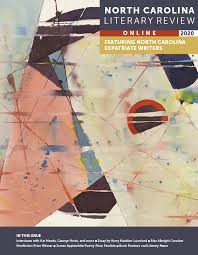
NCLR


A poem and two reviews by me,
plus an interview in the NCLROnline,
plus much more...
Click on this link, and then click 
on the image of the cover you see.
Or click individual links below.

James Applewhite finalist
p. 55

A Virtual Road-Trip Interview:
Conversations with Five Expatriate
North Carolina Writers
Dale Ray Phillips p. 57
Tara Powell p. 60
De'Shawn Charles Winslow p. 66
Robert Morgan p. 75
(There's also a long piece about George Hovis
and his new book, The Skin Artist, on p. 44.)

(reviews of two new Nieman books)

Saturday, May 20, 2017

Tabago!

Novelist and poet Seb Doubinsky (he writes in both French and English) has a new project he calls "The Tabago Page." Interviews with writers will not focus on marketing and promotion but try to dig a little deeper into the work and the novelist or poet (or the poet-novelist or novelist-poet. Not sure what I am!)

Here is my interview.

And thanks to those who have already shared on social media. 

Tuesday, May 10, 2016

Brazil interview for Maze of Blood

Art by Clive Hicks-Jenkins.
Design by Mary-Frances Glover Burt.
Mercer, fall 2015

Suzanne Brazil interviewed me about Maze of Blood for Women Writers, Women's Books. And as she did when interviewing me when Glimmerglass appeared, she asked interesting questions. You can find the brand new interview here. (See the note about Suzanne at the foot of the interview--she's a busy lady.) Thank you to Suzanne!

Interview for Maze of Blood at Women Writers, Women's Books


Interview for Glimmerglass at Blogcritics part one and part two 
or The Seattle Post-Intelligencer part one and part two


Art, Clive Hicks-Jenkins
Design, Mary-Frances Glover Burt

Tuesday, March 17, 2015

Brazil and fire--

Suzanne makes posters (of me)

Today I'm finishing up (hope!) galleys for Maze of Blood (now with an updated page.) Meanwhile, here's a fun thing from Suzanne Brazil, who interviewed me recently (a 2-part interview that ran at Blogcritics and Seattle Post-Intelligencer). She is making e-posters with quotes drawn from the interview, and so far I've spotted and collected five on a Pinterest board. Huge thanks to Suzanne for spending so much time and thought on the interview and posters. Evidently there will be more:


Fire

And thanks to Endicott Studio for mentioning "The Salamander Bride" as a fire read in a bibliography accompanying that interesting article, "Fire and the Fire Bringer" by Heinz Insu Fenkl. I loved the old Endicott Studio and am glad it is back, all new and shiny.

Wednesday, August 27, 2014

Jot of glory + dewy-new interview--

from "Letter from the Editor," Books and Culture Magazine

Speaking of superb novels, let me recommend two others that will be appearing not too long after you receive this issue. In September, Knopf will publish Station Eleven by Emily St. John Mandel, which imagines the aftermath of a global pandemic of unprecedented ferocity. We follow a wandering troupe as they make their circuit in the upper Midwest, stopping at tiny settlements to perform Shakespeare and play music. In the same month, Mercer University Press will publish Marly Youmans' Glimmerglass, set in Cooper country in New York State, a book in which the fantastic and the quotidian are cunningly interlaced. These two novels have very little in common except for the quality of their imagination—but that is more than enough to make them kin.

Online interview

The industrious G. G. has an interview series called Writers Who Read, and she does indeed seem to be curious about everything in book land and describes herself as "writer of romance, reader of everything." Thank you to her for a new interview. When I reread the responses this morning, I was surprised by a few things, and that's probably to the good. Jump here.

How it starts: Who are you? 

Marly Youmans. Some people know me as the author of 13 books, counting this year’s Glimmerglass and next year’s Maze of Blood. I write poetry (mostly formal, including long narratives), short stories, novels, and the occasional essay. Other people know me by my married name, and as the mother of three children. A few village spies have figured out that I am both of those people.

And from there it rambles on to beloved books, (dis)organization, modes of reading, and more. Take a peek and know me better...

Monday, May 05, 2014

CC: Robbi Nester asks--

Lummox Press, 2014
What follows is a copy of an interview conducted by Robbi Nester, posted last Saturday on a facebook page for The Liberal Media Made me Do It, a brand new anthology from Lummox Press, edited by Robbi. Although the interview has been re-posted here and there on facebook, I'm adding a copy for people who don't venture that way online.

* * *

For our second interview with a contributor from the book, I've chosen Marly Youmans, a poet, novelist, and commentator on the arts (and other things as well).

Robbi: Do you often listen to/write about public media?

Marly: I often listen to NPR, but television is not part of my day--I don't really have time for it, though I did watch PBS when I was much younger. I once had an idea for a novel while listening to a folk music show on WAMC (Albany.) A folk singer on Wanda Fish's The Hudson River Sampler told an anecdote about her grandmother wandering off the edge of her farm in Vermont and becoming lost, traveling on foot in Canada for months without meeting a soul. That little seed of an idea eventually became Catherwood (Farrar, Straus and Giroux, 1996. It's out of print now but will be back in print within a year.)

UK: Stanza Press, 2012
Now in second printing!
RN: What else are you doing in your work right now?

MY: I'm writing poems and tiny stories because I have little time at the moment. I have several poetry and fiction manuscripts to polish, and I have an idea for a novel that I want to work on when time appears! I'm not in a hurry to bring out another poetry book because the last three came in such close succession (The Throne of Psyche, The Foliate Head and Thaliad.) I'll be on tour again later in the year, and I'll be teaching at Antioch in the summer.

RN: National Poetry Month just ended; what poetry-related activities do you recommend to our readers or potential readers?

MY: Oh, I don't know--these days, when poetry has such a dwindled audience, recommendations seem almost out of place. Go to a good university library and enjoy the lost art of browsing? Read a Shakespeare play aloud with friends? (Pick one with some marvelous blank verse, couplets, or songs.) Or study a pronunciation guide and then read some Chaucer with friends, taking turns? (Enjoy it--laugh a lot!) Memorize a poem? Go to a well-stocked bookstore and buy a new poetry book by a living writer? Pick out a press to support and follow--buy books directly from their site? Choose a writer to support, so you see how his or her work changes over time? Try translating or writing a particular form in order to understand it better? Read translated poetry?

Montreal: Phoenicia Publishing, 2012
This is a beautiful and powerful book--
worth owning, worth reading and
rereading. --Rachel Barenblat
RN: Though I see your reason for saying poetry's audience has dwindled, all the same, the number of MFA programs (online particularly), spoken word events, self-publishing outlets, and such has grown exponentially. What do you think this disparity means? Does it herald big changes in the art, or only the effort to turn the impulse of poetry, which will always be with us, into a commodity?

MY: My opinion on these subjects is a tangle of contradictions. For example, I don't think an over-the-top proliferation of MFA programs (it is, yes, a commodity and cash cow for universities) is a good tendency, given the state of the economy and the level of student debt incurred by many. On the other hand, a free ride with years to write must be very sweet! And I know people who have gone for the MFA because they need more credentialing for teaching, even though they've published quite a few books. That's useful, though here I point out that we've gone credentialing-mad in the last fifty years. If an English department wants a writer, they should go for a writer of good books and have no concern for the diploma. But the university administration has a concern with ticking off boxes and improving its rankings. But what's the use of a credential to poems and stories? None. It's like giving a tiara and matching earrings to a terrier. But we are a nation obsessed with credentials from the ivory tower. Signs of change are appearing on that front, though, and perhaps we will become more sensible.

Mercer University Press, 2012
The Ferrol Sams Award
Silver Award, ForeWord BOTYA
I expect that creative writing (like a lot of people, I'm not fond of that label) was more vibrant when it meant bold first ventures at places like The University of Iowa and UNC-Greensboro and Hollins--when it had the life and energy of something new and daring. Lately the programs have been attacked as places where writers teach, anoint, and credential other writers who will go on to teach, anoint, credential--an art for the free market economy. A program today is going to have to struggle against that image. So far, though, they seem to be surviving and multiplying.

You ask about self-publishing. Self-publishing is one of those curious things that is just exactly as good as the work of the person making use of it. Self-publishing has an old, venerable past. It also has an old, cheesy past. The dilemma is once again the excessive nature of current usage, this time with the added difficulty for the reader of finding needles in a gargantuan haystack.

I'm not in the least opposed to self-publishing, particularly for mid-list writers. The major New York publishers put enormous amounts of money and time behind the lead books they decide to sell, but the rest of the list must share small money and small marketing time. (It's hard. The gobbling-up of large New York houses has meant pressure from conglomerates to fatten profits in a traditionally low-but-steady-profit industry.) A first-rate writer without lead book status becomes a design in the classy wallpaper on which the lead books are hung.

Mercer University Press, 2011
"a writer of rare ability whose works
will one day be studied by serious
students of poetry."Baton Rouge Advocate
But here's an issue for poets: poetry is never lead book material. Oh, you may find some push for a Billy Collins or a Mary Oliver or a Sharon Olds. You may find a push behind a celebrity who decides to publish a book of poems. Is it a problem? Not really. A poet needs to see the situation and get on with navigating rocks and shoals; if that means self-publishing allures, fine.

Currently I'm thinking about self-publishing the reprint of a novel, even though I have offers from a number of publishers. I'd like to give it a try once, if only out of curiosity. Whitman, Woolf, and plenty of other writers have relied on self-publishing.

Since I've been living in a rural village for the past 15 years, I don't have a sense of the range of poetry events available in a city. My experience with tour readings at bookstores and other venues is that they are still attended by many different sorts of people, not just writers, and that's good. I'd be curious to know how many people attend, say, "spoken word events," and how often they draw a crowd including more than the organizers and the poets who appear regularly. Perhaps that's irrelevant and wrong-headed--perhaps the fundamental purpose of such events is to create a sort of sub-world where poetry retains meaning and purpose for every inhabitant. Sometimes I have the feeling that poets are a sort of lacemakers' guild, quietly going on with the work in stray corners. If that's so, fine. I'll make lace.

Tuesday, February 05, 2013

Marly goes Lightspeed

Prolegomenon to the Adventures of Childe Phoenix by Marly Youmans (illustrated by Galen Dara)The story is illustrated by Galen Dara.


Read at Lightspeed
"Prolegomenon to the Adventures of Childe Phoenix" (short story) is up at Lightspeed. Many thanks to writers and publishers Gavin Grant and Kelly Link for its original print publication in Lady Churchill's Rosebud Wristlet (2007), and to Lightspeed editor John Joseph Adams for asking to reprint the story. (John Crowley also has a reprint in this issue.) I am glad to find that even the stranger dictates of the heart may find a welcome out in the world.

Listen at Lightspeed
Paul Boehmer's reading of "Prologomenon to the Adventures of Childe Phoenix" is also available for download (time 38+ minutes.)

Read more: Author Spotlight
Christie Yant interviews me, asking questions about the story in the areas of response, family secrets, poetry vs. prose, theme, and upcoming publications.

Later: Oops. I suppose that I should have noted that a place for leaving comments is at the very foot of each Lightspeed page... Enjoy!

Monday, July 30, 2012

New interview link

In answer to a request for another link: the WSKG interview has now shifted into archives and on-demand play. You may find it here, accompanied by an article by Bill Jaker, or else you may go to the full list of "Off the Page" shows with Mr. Jaker here. It's an hour-long show, so we had time to discuss and read from A Death at the White Camellia Orphanage, answer a couple of emailed and called-in questions, and read from The Throne of Psyche, The Foliate Head, and the forthcoming-in-November Thaliad. Related link: opening chapter of the novel at Scribd.

Friday, February 17, 2012

Interview by a college senior


MARLY YOUMANS,
Interview by Benjamin Francis Miller
16 February 2012


When did you first know you wanted to write for a living?

My mother says she knew I would be a writer when I was in second grade. I don’t remember ever wanting to be much else, though I was also a professor for a while and enjoyed looking at poetry and fiction with my students.

What kind of writing do you usually do? Academic, business, literature etc.?

Novels – I tend to not do the same thing twice, so my novels are quite varied.
Short stories – Most of these I do as a response to requests from anthologists.
Poetry – formal poems of various sorts—lyric, monologue, narrative. One epic!

How long have you been writing?

I was a passionate reader before I was a passionate writer, but words have always been a vocation for me. As a child, reading was my vocation and far ahead of school in importance. I read under my desk, in the tub, in the bed by flashlight…

Has any of your work been published?

Little Jordan – novella – David R. Godine, Publisher, 1995
Catherwood – novel – Farrar, Straus & Giroux, 1996
The Wolf Pit – novel – Farrar, Straus & Giroux, 2001 The Michael Shaara Award
Claire – poetry – Louisiana State University Press, 2003
The Curse of the Raven Mocker – Southern fantasy novel for children, FSG, 2003
Ingledove – Southern fantasy novel for young adults, FSG, 2005
Val/Orson – novel – UK: P. S. Publishing, 2009
The Throne of Psyche – poetry – Mercer University Press, 2011
A Death at the White Camellia Orphanage – novel – Mercer University Press,
March 2012  The Ferrol Sams Award in Fiction

Forthcoming—
Thaliad – epic poem – Phoenicia Publishing of Montreal
The Foliate Head – poetry – UK: Stanza Press
Maze of Blood – novel – Mercer University Press
Glimmerglass – novel – Mercer University Press

And I have oodles of poetry and fiction in magazines and anthologies…
You can find out more about me at my blog/website, http://www.thepalaceat2.blogspot.com.

What are some of your stronger points as a writer?

My manuscripts are said to be very “clean” and so not much trouble for an editor.
I never have writer’s block and am productive.
I have joy in spilling words on the page.

I also have been lucky enough to collaborate in special projects with some important visual artists like Makoto Fujimura and Clive Hicks-Jenkins and currently am collaborating with composer Paul Digby and painter Lynn Diby in one project and on others with English painter Graham Ward and Clive Hicks-Jenkins of Wales.

How long does it usually take to complete your work?

I am quite fast with a rough draft. However, I would add that length of time is meaningless. The muse’s gifts are unfair—some take forever to do what others accomplish with careless ease.

What are some of the things which get in your way when writing?

House drudgery. Mountains of laundry. Children’s needs. Bills. Taxes. Appointments. Volunteering. The person from Porlock. Life! But life and people always come first—without life, there is no writing, no love, no sap in paper veins, no source material.

Do you have any quirks or problems you find in your writing which annoy you?

I wish to be tidier in my writing room!

When writing about places you haven't been, how much work do you put into researching them? What are some of your tactics while researching?

I never over-research places, particularly places in the past. You should be careful not to burden your prose with research—the same amount of the world should be visible as if you were writing about your own sphere.

What one needs seems to magically appear when you’re working on a book—things that would pass unnoticed normally are all lit up and shiny with importance. When I wrote The Wolf Pit, I managed to please historians of the Civil War by using only primary materials—therefore it was impossible for me to do what, say, Kaye Gibbons did in her Civil War book and have people jaunting around on railroads when the tracks had already been destroyed.

What have been some of the most significant influences on your writing?

A deep, passionate engagement with books and poetry while a child and teen is essential to the writer I am. Lewis Carroll, Dickens, Wilkie Collins, Yeats, Keats, Anglo-Saxon, the Bronte sisters, the Gawain poet, Herbert, Marvell, Donne, Fielding, Austen, Stevens, Blake, Dickinson, Melville, Hawthorne, Whitman, Faulkner, etc. in English, plus much modern and contemporary writing and work in translation.

What was your most challenging written work? Why?

Novels are all a challenge, each in its own way, because with a novel one is always beginning again with no clear path through an invisible labyrinth. And novels are long.

As for poetry, I once typed my then-long hair around the patten of a typewriter—so retrieving my hair after drafting a poem called “Snow House Stories” was a bit arduous… 

My main difficulty with poetry was coming to the understanding that I was bored with free verse and simple lyric and needed muscular, demanding form and an infusion of story and voices. I was too influenced by other writers around me for a long time, and I threw away most of my poetry. Writing fiction showed me what I desired in many ways, and it also taught me that I wanted poetry to be as unlike fiction as it could be.

Do you have any insight for young aspiring authors?

Read books old and new. Buy books. Scribble in the margins! Soak up the word. Spend time with great masters of the word, not feeble or trendy writers. The company you keep in books will mark you, so be careful what company you choose.

Write a manifesto for yourself now and then!

Don’t let anyone pronounce your fate for good or ill as a young writer.
If you have the requisite tools and skills, dive in and practice the art. Nobody can say what the vagaries of life—the intense grief and joy of youth, the losses that come to all—and the exercise of the heart and mind and soul will do to you by the age of 30. They may just make a writer of you.

On the other hand, don’t set your longings on some outside validation because “success” is often fool’s gold and a fool’s goal and can break your precious heart. Write because you love words and stories or aspire to the song-like heights of poetry.  Write because moving words on the page is a thrill and a kick and makes you glad.

Tuesday, May 17, 2011

Maggie's interview and more

HOME SILLY-SWEET HOME
N & Dad coming home from the track meet while I unload the car of my gear for Wales and North Carolina, along with sundry rocks and gifts and plants from my mother's garden.

N, age 13: Squints eyes, looks at a license on the car ahead.
N: "A mind is like a parakeet."
Dad, age 50: "No, it says a mind is like a parachute."
N: "No, parakeet."
Dad: "No, parachute. They both work best when open."
N: "I'll prove it to you."
Dad: "How?"
N: "Does parachute have a Q in it?"
Dad: "No, but neither does parakeet."
N: "Oh, yeah."

FROM ABERYSTWYTH, WALES
TO CULLOWHEE, NORTH CAROLINA:
WITH THANKS (written May 14)

I'm nearing the end of my long trip from upstate New York to western North Carolina to Wales to North Carolina to New York. When I get home, I'll post some pictures and stories from the astonishing and grand parade of events in honor of the 60th birthday retrospective show for artist Clive Hicks-Jenkins, held at the the lovely (and large--what a grand collection of paintings!) Gregynog Gallery of The National Library of Wales.

As Carroll says, I had a perfectly frabjous time, callooh, callay! 60th birthday retrospectives only come around once and are a great honor. Likewise, invitations to be a part of such things only come once. I owe my husband many thanks for holding the family fort and letting me be free to wander the world, and I owe Peter Wakelin and Clive many thanks for inviting me to stay and play the country house visitor with a houseful of artists and writers. And thanks to you, the Dear Reader, for returning to me here!

MAGGIE TOBIAS INTERVIEW
Reprinted with permission of "The Sylva Herald"

The bright and lovely Maggie Tobias has written two articles about me in the past weeks, and I post something from them here, before they vanish into archives. She did endow me with more books than I have written (The Throne of Psyche is number eight, unless one counts editions, and five are forthcoming. However, I shall take the extras as a challenge!) I answered her interview questions at 2:00 a.m. at the kitchen table of Ty Isaf, in the Istwyth valley of Wales.

Youmans discusses writing, family, new poetry book
By Maggie Tobias  May 12, 2011


Tonight (Thursday) at City Lights Bookstore, author Marly Youmans will read from her new collection of poetry – “The Throne of Psyche” – at 7 p.m. Her new poems examine the boundaries between what is human and what is not, between the earthly world and the otherwordly.

The title poem “The Throne of Psyche” tells the story of the union of Eros, the Greek god of love, and Psyche, a mortal girl.

Stories of transformations and metamorphoses are a constant in the collection, and Youmans’ delicate language gives her poems a certain seriousness.

Youmans, who grew up in Cullowhee, is the daughter of Mary Youmans of Cullowhee and the late Hubert Youmans. She now lives in Cooperstown, N.Y., with her husband and three children.

She’s written several dozen other books, which include novellas and short stories, including “Claire,” “The Wolf Pit,” “Catherwood,” “Ingledove,” “Little Jordan,” and “Curse of the Raven Mocker.”

The Herald caught up with Youmans before tonight’s reading to get her views on poetry, writing and family – and how she balances all three.

Herald: Why did you choose the title poem? Is the story of Psyche special to you?

Youmans: The story of Psyche is wonderful to work with because it takes place in a highly colored, physical world, and yet it also is the story of the progress of a soul. The tale is dramatic and moves from Earth to hell to paradise. It is a great adventure that is always ready for transformation.

Herald: Are you looking forward to reading your work in Sylva?

Youmans: I’m always pleased to read in Sylva, though this time I have hardly had a chance to think about it because I am in Wales and for the next three days will be participating in some very big events. I’ll get to Cullowhee and have a day to get over being jet-lagged, so I may be a bit wired.

Herald: What’s your favorite part about visiting the mountains?

Youmans: My mother is a fascinating though overly modest woman who is always up to something interesting in her gardening or weaving. And my eldest son is at Mars Hill College, so I get to bring him to Cullowhee. I love eating Southern food and seeing shadbush or sourwood, pink shell or flame azalea in bloom. I always feel glad driving South when the land begins to rise.

Herald: Can you describe your style of poetry?

Youmans: My poems are formal – by that I mean that I take advantage of all the tools of poetry. I write metrical poetry, and I am not adverse to rhyme. I like a singing quality and “swing” in poetry. Since I also write short stories and novels, I am keen for my poetry to be as unlike fiction as possible; that’s one reason that I am drawn to form. Another reason is that I feel comfortable and happy pushing words around into formal, muscular shapes. I don’t ask other poets to do likewise, but it is my way.

Herald: Was there ever a time when you wrote for recognition or fame?

Youmans: I’m afraid that “recognition and fame” are qualities that sit uneasily with English-language poetry in the 21st century. I never think about such things because humility toward the art and toward the written work of the past is the proper stance for a writer, as I see it.

My concern is never for what praise it may find, though I am always happy when people like my work and it receives the tribute of some honor. But real honor lies in being true to the work.

Herald: Does poetry satisfy something that fiction doesn’t? Do you have different audiences for your different types of writing?

Youmans: My feeling about fiction versus poetry is that all my writing comes from the same fount but flows into different shapes. That said, the lyric gush of short poetry is a lovely sensation.

Herald: What does poetry do for the reader?

Youmans: It is not useful; it is not a tool to better oneself. At its best, a poem is a portal to what Chaucer called “larger life” and is a means to joy. It is possible to become lost in a poem, to be transformed, if only momentarily. It is a kind of fruitful self-forgetfulness, good for the soul.

Herald: How early did you begin writing?

Youmans: My mother says that she knew I would be a writer when I was in second grade; that is, the year I turned 6.

Herald: Do you keep a tight work schedule?

Youmans: No, I do not keep a regular, rigid schedule. I doubt that any writer who is the mother of three can do so. I write whenever I can. I have several useful qualities that help me get work done: I have an ability to get back into a piece very quickly, and I have an unusually good capacity for concentration.

Herald: Where do you do your writing?

Youmans: I write wherever and whenever I can. Because my life is complicated, I cannot afford to be fussy about such things, or to insist on having special comforts around me when I write. Again, I can’t be a mother of three and be particular about my when and where.

Herald: Do you ever go back and reread your books and short stories?

Youmans: I do not reread my fiction once it is published unless I am revising for inclusion in an anthology. Occasionally I reread a poem, but one rereads so much while revising; when it is out in the world, it is gone – given away to the people who read it.

Herald: How about your husband. Is he supportive? What is the secret to the longevity of your relationship?

Youmans: My husband cooks dinner most nights, and that is a huge gift to a woman who is a writer. He is also a father who helps with children, who goes on Scout trips and teaches Sunday School. We have many common tastes and see the world in similar ways.

Herald: How are you able to write so much?

Youmans: Writing is a great joy to me. The act of bringing something new into the world brings pleasure.

Herald: Do you write for an ideal reader or a particular audience?

Youmans: I’ve never quite understood questions about the reader one writes for – when something new pours out, I am not considering my reader. I am caught up and lost in the stream of words. If I lose myself in them, what I write will find its proper readers.

MORE MAGGIERY

On May 5th, The Sylva Herald printed another of Maggie's articles about me, publicizing the upcoming reading. One remark she made reminded me of my mother-in-law, long ago asking why I didn't write a nice little bestseller! Luckily I am not roiled and tormented by such an idea...  

Here is a clip:

Youmans has written in every genre, and does it all with joy and lyricism. With her open approach to all writing styles and lack of concern for the politics of publishing and bestseller lists, Youmans may never run out of material.

Saturday, May 01, 2010

Interview at "Clarkesworld"

Image: I picked this image from the Clarkesworld covers because it's a sort of foliate head, and I have a mania for foliate heads and even a book coming out called The Foliate Head. The artist is Adam Chowles of the U.K.

If you pop over to the current issue of Clarkesworld, you can find a rather long interview with me. The interviewer is Jeremy L. C. Jones, who I will be meeting when I mosey down to Spartanburg for Shared Worlds. An odd thing is that his grandparents lived in the house across the street from me, and his father grew up one door down from that house. His grandfather was a famous figure here in Cooperstown. Meanwhile, I was born in South Carolina. It strikes me that Jer ought to live where I live, and I ought to live where he lives. But life is strange, and so is Clarkesworld.

Here's the jump.

Comments are turned off because I'm sure Jer and Clarkesworld deserve them more than I do! You'll find a place to log comments at the bottom of the interview. Thanks, Mr. Jones . . .

Sunday, May 21, 2006

Corey Mesler & The-Fall-from-Paradise Interview, etc.

MESLER & YOUMANS: TALK

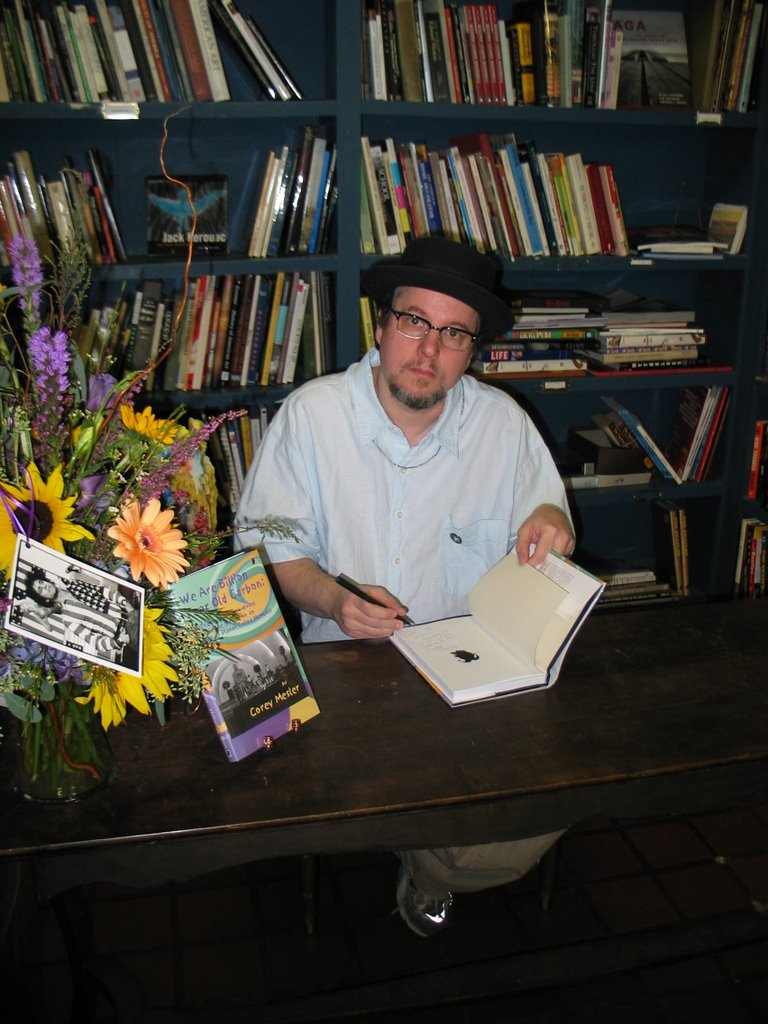
On Tuesday, May 23, you may read COREY MESLER
& THE FALL FROM PARADISE INTERVIEW
at Sue Henderson’s PublishersMarketplace blog. In it, “Marly Youmans talks to writer and bookseller Corey Mesler about the golden age of bookselling, his more than 30 years in the business, 9/11, the internet, book-browsing, Memphis, human nature, Fredric Koeppel, love, and destiny.”

This one will be a funny and sad interview, well worth perusing for book lovers. It has already made one reader "tear up," though only one reader has read it so far... See the little guys at the independents tilt (and sometimes fall) against the big guys.

These days, writers can't afford to ignore the behemoths of chain and online bookstores, but we really hate to see an independent bookseller lying wounded and bleeding by the side of the road. Let's keep some places where bookstores are governed by a local bookseller's passion, where local writers are supported by community, and where good books stay on the shelves after the "3-month window" (probably down to 2 by now!) for a new book closes.

Here’s a sample clip:

Youmans:
Last week I wrote, “Besides, you have to love a guy like Corey Mesler who would be so astonishingly foolhardy as to be a poet, a short story writer, a novelist, and a bookseller. That's somebody living on the front quad of risk! Then there's Cheryl, bookseller, mother of two, spouse-of-Corey: undoubtedly among the intrepid of this world.” It seems just as true this week. Despite Walmart and bookstore chains and web stores, you both go on striving to make a little world that words in good order and people can inhabit together. In the face of havoc and hard times, can you say something about why you chose such a life—why you choose it still?

Mesler:
It chose me. When I was 18, a mooncalf, a dope, I didn’t know anything about books. I didn’t even know that they came out in hardback and then a year later in paperback. I didn’t know Updike from Upjohn. I didn’t know Proust rhymed with roost. So, why was I led to apply at my neighborhood Waldenbooks? God thumped me on the back of the head, and said, here, mooncalf, here is your destiny.

Oh, and, thanks for the love.

********
RAVENS ON THE WING

For those who ordered Raven Mockers during the promotion: the Ravens are still flying from the nest! I know, I know, but I ran out of cute little boxes! I suppose one has to suffer a bit for a bargain--at least, if it's my bargain.

I got punchy doing inscriptions and wrote James Simpson some hortative doggerel from the Witchmaster on his book. Jim, you have a unique copy! As for the rest of you readers (and sometimes budding writers), you may find all kinds of weird things (feathers! eggs in nests! ridiculous comments!) on yours if I inscribed it on Friday night. Afterward I dropped into bed at precisely 2:00 a.m. and dreamed of the Palace. (Okay, that's a fiction. I didn’t, so far as I know, but it sounds right. Might've.)

********
ONE EENTSY MIRACLE OF BOOKS

Something marvelous has happened in the book world. N, age 8, has fallen utterly in love with a book. He found it in the ongoing Library Sale box at Huntington Library in Oneonta, and it is--drum roll, ta da! and confetti--Marjorie Cowley's Dar and the Spear-Thrower (Clarion Books, 1994), a novel about a Cro-Magnon boy living in southeastern France some 15,000 years ago. He checks traps, climbs for healing plants, receives the tribal mark of manhood, meets a stranger, ventures to another tribe, learns to carve and use a spear thrower, and makes peace with a difficult uncle. And one little boy is deep in the wonders and perils of the past.

Now that's magic.

*******