NOTE:
SAFARI seems to no longer work
for comments...use another browser?

Wednesday, November 12, 2014

Caleb Seeling reviews Glimmerglass

from Notes from the Publishing Underground
(November 12, Conundrum Press newsletter.)
"In 2011, Conundrum press was acquired by Samizdat Group, LLC, owned by Caleb Seeling... Conundrum Press is a stand-alone, traditional model literary press. Future plans include a Rocky Mountain Poetry Series, the details of which are forthcoming, and a philanthropic plan to support literary endeavors from sales of our books."

Fiction Review by Caleb J Seeling


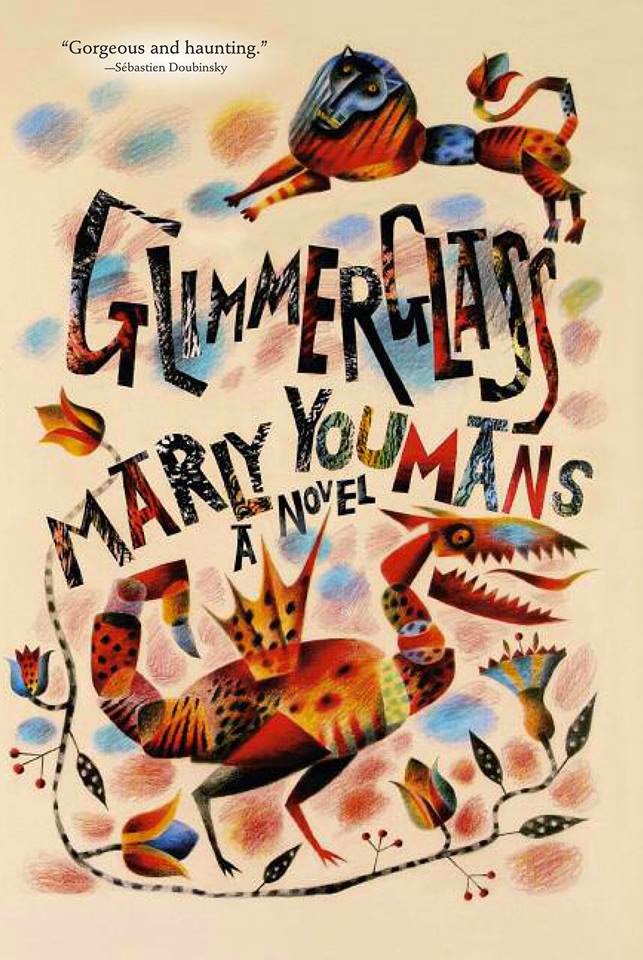
Glimmerglass: A Novel
By Marly Youmans
 

Marly Youmans is one of those rare literary figures who excels at both poetry and prose, each informing the other. Her latest novel, Glimmerglass, is a beautiful and skillfully told modern-day fairy tale. Cynthia Sorrel is a failed artist trying to rediscover herself and her place in the world, and we are drawn with her into the scenic, slightly mysterious New England hamlet of Cooper Patent. The residents of Cooper Patent seem as serene and peaceful as the lake, Glimmerglass, beside which the village is nestled. There are of course secrets and jealousies lurking just below the surface, but Youmans lulls the reader into a dreamlike state until, as in all good fairy tales, she sinks the reader into the dark waters where reality is blurred and bent like a half-submerged stick. It is here that the reader begins to feel more than know the meaning of what happens to Cynthia. A gorgeous book that is quick to read and meaty enough to digest slowly, Glimmerglass is a wonderful novel with which to curl up next to a fire and spend chilly nights.

Sunday, November 09, 2014

Review plus post, the Star (NC)

Art by Clive Hicks-Jenkins for Glimmerglass.
A novel turn, rich and strange 


Review, Ben Steelman, StarNews 
(Wilmington, North Carolina) 
9 November 2014
   
3-page review begins here

Clip: "Fantasy and myth mix with classic whodunit in “Glimmerglass,” the latest novel from poet and South Carolina native Marly Youmans. This is only detective fiction, though, in the sense that “Hamlet” is a play about a kid who can't get along with his stepfather. Youmans takes a couple of overworked genres and makes them undergo a sea change into something rich and strange."

Photo by Paul Digby, July 2014
This one was taken in Ohio right after I taught
at the Antioch Writing Workshops.
The lady behind "Glimmerglass" 


Background post
by Ben Steelman, 
Bookmarks blog
at StarNews Online 
9 November 2014.
Read it here.

Favorite clips:

...Youmans writes one of the best writers's blogs in the ether...

Youmans’ poetry collections include “Thaliad,” “The Throne of Psyche” and “Claire.” I have been meaning to write for years about “The Foliate Head,” her 2012 poem cycle about the Green Man, published in Britain by Stanza Press, which must rank as one of the most beautiful books of the 21st century. Notable are the illustrations and illuminations by the Welsh artist Clive Hicks Jenkins. Jenkins also did the artwork for “Glimmerglass.” *

*Glimmerglass, Thaliad, and The Foliate Head all contain exterior and extensive interior artwork by Clive, and his art is also on the cover of The Throne of Psyche and Val/Orson. The design work on The Foliate Head is by Andrew Wakelin, wonderful UK designer.

Thank you, Mr. Steelman!

* * *

crew list here
There's a typo in the blog post that I find amusing. My father was a sharecropper's kid and teenage tail gunner on the WWII Incendiary Blonde who, thanks to the G. I. bill, later became a professor of analytical chemistry. (His teen train escapades, his farm home, and his father's love for one of his mixed race brothers influenced the creation of Pip in A Death at the White Camellia Orphanage.) As a professor, he couldn't help butting heads with administrators and often said, "The lightweights float right to the top." And so I found it comical that he appears as a college president rather than professor... He also liked to quote Lewis Carroll's "I'm mad. You're mad. We're all mad." That one is a little more generous, as it puts us all in the same zany boat!

If you click on the picture, you'll see my handsome young father standing at far right. Hubert Lafay Youmans of Lexsy, Georgia... Hu. His hand looks a little odd--swollen from a fistfight in town the night before.

Thursday, November 06, 2014

Questions from a young artist and writer (answers from a young crone!)

Chapter header vignette
by Clive Hicks-Jenkins
for my new novel, Glimmerglass
I always imagine that if one person asks questions, there are others who would like to find out more. Here are questions I received today, followed by glances at possible answers... I claim no more than "possible answers" because I am just one small person on the face of the planet, and every artist would have a different set of answers.

How often do you feel inspired to work? How do you feel different when you’re writing than when you’re doing other things that need to be done in life? And I guess how do you get yourself into that place when you’re not there already.


*
If you sit around waiting for inspiration, you’ll stay a dabbler and never get to where you want to go. Search through the simple pleasures of drawing or inking or painting or writing, even if you have no idea where you are going. Move your hand--the mind may well follow. Inspiration might come from doodling and playing and jotting down notes. Inspiration might come from collecting your materials and then waiting in quiet.

Oh, it doesn’t matter “how often” you feel inspired. It's not ever about numbers. It just matters that you try to do your work—that’s the path toward the inspiration.

*

You're young. It's good to have humility before the great masters of the past. It's fine to look at work by your peers. But it's also good to have self-forgetfulness when making art, and that includes a kind of forgetfulness of all you admire--all that makes you feel small and that you cannot "get yourself into that place" and begin.
*

“It is good to love many things, for therein lies the true strength, and whosoever loves much performs much, and can accomplish much, and what is done in love is well done.” I don’t recall that line from Van Gogh's letters, but I bumped into it on the web (so it may be truly his, or not) and think that’s a pretty good assessment of how to make art or any other thing in this life.

*

There’s a scene in one of my books that people have pointed to and asked about many times. A young girl is peeling an orange, a thing she has never done before, and the passage looks at an orange, the fragile veins around the segments and the inner lining with pith and the pebbled exterior and the seeds that seem to float inside the flesh. In terms of the writing, it’s all about seeing like a child. But that passage came about because it was the middle of the night, and I was trying to get work done but felt exhausted and blank—I wanted to get more done because my children were all blessedly asleep, but I would have to be up with them by 7:00 a.m. At that hour--at any hour--they would want a mother, not a writer. So I didn’t wish to waste an hour that I could use to either sleep or write. I went downstairs to the kitchen and fetched an orange and began to peel it slowly in front of my computer. I stared at that orange until it became magical, mysterious, seeded and alive with secrets. I then put the spirit of that orange in the hand of the young girl who had never seen an orange before.

That was how I started that night, by staring and seeing and forcing myself to move forward. Because I was a woman with three small children who had no time to waste on being inspired beforehand. The staring inspired me. The playing with words inspired me. The sitting down in the chair with intention to write inspired me. Inspiration is like a fountain—it will rise and flower into drops and flung water if you give it a chance. But to do so, you need to hush, look, and dream.

*

A feeling of richness and rightness often takes over when I’m writing. If it’s a poem, I might be surfing on Disch’s “lyric gush.” If it’s the first draft of a piece of fiction, I might be dipping and flying, following the thread of story. Then I’m a zany flying fish, skimming and swimming and reveling in the sea of words. So you’re right in saying that making art is just not the same as daily life.

At the very best, it’s being open to the Muse, the pouring life of the world, the Holy Spirit, the water from the fount at the end of the universe… (Mind you, golden moments sometimes come in ordinary life, and if you wish to do so and are quick, you may seize and make something of them.) As you go on and grow in your chosen pursuits, you will more and more be prepared and readied to catch the Muse, snare life, embrace the Spirit, or dip a pail from the fount. But the mere hunt for these precious, frolicsome things will lead you into the lands where inspiration trickles and streams.

And as a human being, you are made to find joy and truth and wonder and a thousand other contrary and tumultuous elements in creation. It’s that simple. Some find a creative satisfaction in teaching, some in reading, some in needle and thread, some in the unfolding mysteries of science, some in sacrifice for others. But we human beings are all meant to participate in some aspect of the ongoing creation that is our universe—the universe that is perhaps just one of many universes. So sit down in the chair and move the pen or move the brush: begin.

Home


Home after many weeks and a final Glimmerglass reading-and-signing event at The Doylestown Bookshop, plus a romp through Henry Chapman Mercer's Fonthill castle! Thanks to my generous Doylestown hosts, David and Karin Svahn. Here's a snip from the somnium or dream-vision passage in the book:
In a sunbeam, the angel's tree glittered, bare and silver. Going to it, she found glistening leaves stuck to the surface of Glimmerglass and pods that stood erect on the branches like golden torches. On peering into the ice, she made out a snake knotted around the bole and a ball of fur snuggled below. She sank through, drawing herself onto the other side of the lake by a tangle of silver roots. Far off, she glimpsed a skater in a black cloak, bowed against the wind as he pulled a child's heavily loaded sleigh.

As she walked in the labyrinth by the lake, a needle slipped from her gown, making an infinitesimally small ping! as the eye widened to let her in. She glimpsed a path of splinters and droplets of water before threading the eye of the needle and sliding head first into the plush midnight fabric of sleep.
Jacket and title page art above by Clive Hicks-Jenkins. Design by Mary-Frances Glover Burt for Mercer.