NOTE:
SAFARI seems to no longer work
for comments...use another browser?
Showing posts with label Ashley Cooper. Show all posts

Wednesday, February 13, 2019

Sundry on Wednesday


Cooperstown arts news:
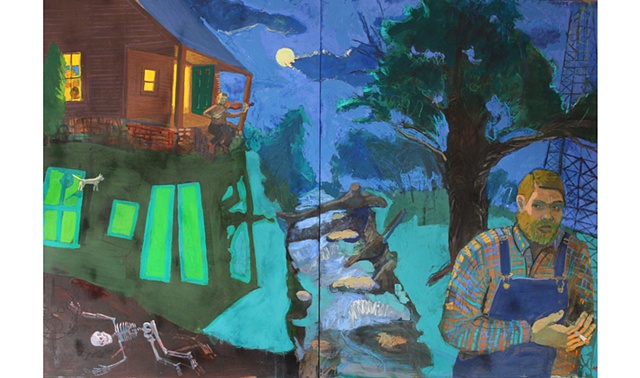
Ashley Norwood Cooper's solo show is still up.
New York City friends, please go...

The Likes of Us
at First Street Gallery
through 23 February 2019
526 West 26th Street, Suite 209
New York, NY 10001
Tel: 646-336-8053


What a rugged two weeks it has been! The weather was a little too focused on snow and ice. The sweet, tiny Puffcat died. The long author questionnaire was sent in. The novel manuscript was turned in at three in the morning. Many other things were accomplished that chewed up time. And now I must deal with my neglected house, for I have been giving most of my home attention to words and cat.

* * *

Tomorrow, out pops the Valentine edition of The Rollipoke, which you (naturally) won't want to miss. Advance peek at the next book, available only to Rollipokers... Click on the link to Be Mine: that is, to be a Rollipoker. 

Nobody loves you? Nobody sends you a Valentine? Weep not! Have a Rollipoke Valentine!

* * *

If you're at all interested in a sharp-edged critique of the state of the humanities (particularly English studies) on our campuses, I think this article by Gilbert T. Sewall is a must read--hat tip to the Prufrock newsletter. Thank God that I dropped out of academia after getting tenure because that preserved the freedom of my mind for my books. I might have been weak-willed. Who knows? Leaving the academic world protected me from rampant ideologies, which are the ruination of art.

After reading it, I was thinking about teaching Huckleberry Finn, talking with my students about that crucial, deep-down beautiful scene where Huck says, "All right, then, I'll go to hell." With no understanding of our Christian heritage and how it has been the underpinning of Western history, how can a reader even understand the huge thing that Huck is willing to give up out of love for his friend, a slave? Can a reader even feel the depths of sacrifice in that love? How can a reader see and understand that Huck is turning away from a false morality and a false vision of God and toward a true one, even though he does not know it? How can a reader have the slightest understanding of how huge the scene is, a turning point in our literary history, walking us into an American literature where the growth of the individual soul and the rule of the individual mind is central? 

Also, I was remembering what sheer fun it was to teach Chaucer in a survey course, and how much laughter and joy there was in the classroom as students had a brief lesson in pronunciation and then read aloud. To feel the words in the mouth, to have a sense of another time, another world--yet so strangely close to our own!--how precious that was. And now an English major might not encounter Chaucer at all.

There are a million things to say in response to that article, but one that has bothered me for a long time is the way that we are depriving our young writers of the best that has been thought and written. As makers, we want to stand on giants, not on little hobbits. We want enduring stone, not fragile papier-mâché novelty. We want vellum, not foolscap. To discard, to encourage young writers to assume that Chaucer and Milton and Shakespeare and the King James Bible (all those writers and translators, so dead! so white! so long ago!) are of no literary account and have nothing to say to us today is to harm young writers in the West. It is to plant their feet on sand. Yes, we want to know the writing of our own times. Sure, we want to read new voices of all sorts. We want to praise and support worthy voices of our era. But we also want to pay the obeisance owed to the glories of the past. To move forward, we dive through the past. It saddens me that such things need to be said.

* * *

Snow is falling (I know, I know--it's the Cooperstown usual for February.) But these are lovely whirls of snowflakes as big as feathers, crisscrossing on wayward currents. And the bird feeders are busy with juncos and chickadees and pine siskins. Best of all, I finally have a squirrel-defeating feeder, so I am watching a morbidly obese squirrel (no doubt fattened on our seeds) climb up and then slide down. I've always disliked the word chuckle except when it describes something other than a laugh, but maybe this is the right place for one. Keep cosy...

* * *

Happy St. Valentine's Day, y'all!

Rock doves by photographer Juha Soininen of Finland at sxc.hu

Thursday, October 06, 2016

Good things

Ashley Norwood Cooper, "The Virgin Mary Paints St. Luke on her iPad"
is at left (look for Mary in a red gown.)
no. 1

Hurrah for another Pushcart Prize poetry nomination! Thanks to Trinacria for nominating "Portrait of the Magi as Three Horses."

no. 2

Franklin Einspruch says: "Perhaps for the first time in history, we are looking at the possibility of a conservative avant-garde." He was talking about visual arts, but it works for writing as well.  (I often think that the way forward is through the tradition.)

no. 3

I'll be speaking at The Frederick Buechner Workshops at Fuller Seminary in Pasadena next year! (And I'm going to Kyoto in 2017....) Feeling sorry for family members who will be doomed to stay home and feed the cats!

no. 4

Tonight my friend and neighbor Ashley Norwood Cooper is talking about "The Virgin Mary Paints St. Luke on her iPad" during the Artists' Walk at at the Church of St. Paul the Apostle near Columbus Circle, NYC!

no. 5

The up side of the Elena Ferrante revelation is that her story strikes a blow against cultural appropriation--a belief that could destroy the arts in our time, if allowed full sway.

Saturday, September 24, 2016

Dear old Blogspot,

Have I mentioned that Facebook has a thing for me? Facebook is constantly asking me what's on my mind, though it (he?) never offers to give me a penny--not one red cent--for what's on my mind. What's on my mind, Facebook? Twitter. Where I just discovered the following important information: 1.) Definitely not keeping up. Entirely missed until now that WaPo declared Hillary Clinton to be "style icon"; 2.) Had no idea there was also a Khloe K. until poet A.M. Juster kardashianized my mind. What is this obsession with the "K"? " 3.) And the thing seen first on Twitter this morning: rules for "your novel." Makes me want to (cheerfully) burn "your" book. Bonfire of the Inanities. Also, I am going to reread my friend Ashley's Facebook post about art and appropriation and see what people thought because that post lacked anything about a presidential candidate's upholstery or an important K, for that matter, and it also had that odd thing, substance, and did the good work of setting firecrackers under a few rules. Which is satisfying in a world where the number of rules for the arts appears to be on the increase. Yes, general corseting of the mind and the arts is as common as web pages, and those in turn are as common as particles of styrofoam in the seas.

And what, Facebook, is this magic thing where you turn small-f Facebook into large-F Facebook? Even on my blog. Here. Yes, exactly like that. You like it like that.

You (you-reader, not you-Facebook or you-blogspot) may possibly be able to tell from the above that I read Andrew Sullivan's "I Used to be a Human Being" yesterday. (Subtitle: An endless bombardment of news and gossip and images has rendered us manic information addicts. It broke me. It might break you, too. Clip: "There is no dark night of the soul anymore that isn’t lit with the flicker of the screen.") And so, human nature being a weathercock, I contemplate whether I should drop out of Facebook and twitter (and possibly blogging), or whether it is possible--wishing to be moderate in all things save those few in which I am genuinely and joyfully and purposefully immoderate--to be moderate with the 'Net.

The whimsical, whirligig wind blows; I turn about and decide that the world is billionated with human beings, and that it doesn't much matter if I talk to myself here and there or not. Except: time. So precious and falling through the hourglass. Must go meet some human beings face to face, and then put some words in the right order.

Update, or threat-tweet from A. M. Juster: You'll like my k-heavy Kardashian double dactyl in next year's Waywiser anthology. Evidently a double dactyl anthology is forthcoming! Better put it on your To Buy list. There may never be another one.

Monday, May 16, 2016

Tales of men and women

Cold morning with something unusual for here: a couple of orioles in the lilac bush. Lilac bushes are about as common as dandelions in the northeast (hence the lilacs of Whitman's "When Lilacs Last in the Dooryard Bloom'd," but a morning with orioles in the lilac bush and goldfinches at the feeder? That's like a flash of sunset at noon. Despite the cold and yesterday's snow flurries, this has been a good week for songbird color with goldfinches and purple finches. I'm drinking tea and reading the distressing article in "The Atlantic" article on "the collapse of a large, wealthy, seemingly modern, seemingly democratic nation just a few hours’ flight from the United States"--socialist Venezuela. If you are drawn to Kafka on the toils of a man caught by the system, or else want to know about exactly how helpless a mother and father can be in the face of government corruption and abrupt loss of essential goods like drugs and food, have a read. The stories are heartbreaking.

Interesting to me for a number of reasons, most of them obvious--one of them local, as there is a Cooperstown connection--is this article, "The Diminution of Women Writers: An American Tradition." I'm not surprised that the author mentions Hawthorne's influence on Sophia Peabody Hawthorne, and his dislike for much of the "scribbling" mob of women. I adore Hawthorne and always feel congenial with him, but wouldn't it be good to have some stories by Sophia, and not just her paintings? The writer gives Constance Fenimore Woolson, named in part after her great-uncle, James Fenimore Cooper, as a prime example: "Woolson’s work and career are a reminder that women’s literary ambitions are not a recent phenomenon. She was a writer who aimed for and reached the heights of literary recognition, despite even greater obstacles than those facing women writers today." She and Henry James were very close friends--close enough to have destroyed their letters to each other--and she influenced his work. Various people have suggested that The Beast in the Jungle is based on his feeling for Constance Fenimore Woolson. I have read that it was William Dean Howells who buried her reputation as a writer after her suicide, and unfortunately James did not defend her in print. Now her books are at last on the rise again.

Painter Yolanda Sharpe reminded me of the case of married painters Lee Krasner and Jackson Pollock, and how Pollock received far more attention. So I dug up this marvelous little quote from ARTnews (1949): "There is a tendency among some of these wives to 'tidy up' their husband's styles. Lee Krasner (Mrs. Jackson Pollock) takes her husband's paint and enamels and changes his unrestrained, sweeping lines into neat little squares and triangles." Aren't those phrases interesting? The name of the show, the tidying wife, the "Mrs. Jackson Pollock," the neatness, the "littleness." "Some of these wives." So the reviewer "sees" that masculine lack of restrain and "sweeping" lines beat female, so little and neat. (I find it hard to apply either adjective to Lee Krasner.)

And painter Ashley Cooper reminded me of the much-shared article about Diego Rivera and Frida Kahlo, "Wife of the Master Mural Painter Gleefully Dabbles in Works of Art."  I went back and looked at it again, Frida Kahlo photographed in what the journalist calls her "foolish little ruffled apron," tied over a black silk dress. She is "a miniature-like little person." Her "miniature-like technique" is opposed to the "heroic" figures of Rivera. The author clearly admires the work, though, describing "a skillful and beautiful style." Perhaps the most interesting element in the article is how well Kahlo knows that it is useless to defend her work or expose her secret ambition, and how she employs truth and laughter. He is the art star, come to Detroit to paint his Detroit industry murals in the Detroit Institute of Arts, and her own work is just beginning to flower. Listen to how she tells the truth of what she knows is inside her, beginning to break forth: "Of course, he does pretty well for a little boy, but it is I who am the big artist." She laughs and mocks her questioner, but in the end she is right. At that moment, he is the better artist. Later on, she will surpass him.

***

And for a postscript, a little Emily Dickinson and Billy Collins...

Friday, December 05, 2014

Hodgepodge soup

Ashley Norwood Cooper!
next event
2-5 this Sunday at 114 Lake St., Cooperstown
Book signing and open studio with Ashley Norwood Cooper. Books (various of mine plus a little catalogue of the deployment series), monoprints, paintings from this series and the prior cut-away houses series, beaujolais nouveau and wine and goodies till everything runs out!

favorite Glimmerglass review of the week (from Amazon, by a novelist) 
***** Beautiful Inside and Out By G. S. Thompson on December 2, 2014 Format: Hardcover This novel is beautiful inside and out. The story feels like a modern fairy tale with writing that dances on the pages in a way that can only be created by a spectacular writer. If you read this book you will know that Youmans is one of the most gifted writers living among us today.If you enjoy the twisting and building of words you will love this author's beautiful writing. If it can be called writing, because it seems more like she's pulling the whispers of angels down from a place we haven't been to yet and gently placing them on paper. Here's another suggestion: Get two copies of this book because you'll want to share it, but you'll be reluctant to ever let your copy go.

picture at upper right
That's Ashley Cooper's rather odd pooch, Peach, who has shoved his head into a number of her paintings--one Christmas Eve, he wolfed down a bag of chocolate-covered espresso beans that were under the tree, and then spent the night running from the house to Otsego Lake aka Glimmerglass like an insane boomerang that simply can't quit.

new page for Glimmerglass
While I have a page on this site for Glimmerglass, I started one yesterday on Facebook as well, which you may find right here. The page is set on "public," so anyone may visit.

book recommendation
This year has been one in which I haven't read nearly as much as I would like, and have traveled more than I would wish for many reasons. But I just read Otfried Preussler's (1923-2013) delicious Krabat and the Sorceror's Mill (The New York Review Children's Collection.) Like all the best children's books, there's no upper age limit on the person who might like it. This tale of Krabat's imprisonment along with other boys and young Krabat and the Sorceror's Mill contains richness and mystery, and powers of friendship and love that battle--one kind of magic against another--against the darkness of the Master. Though I never read the book as a child, I experienced in reading it now that wonderful, light-drenched immersion in a story that happens so often for passionate readers in childhood. Here's a great tribute to the book from Chris Kubica, who did read the book as a boy (and who now lives in Chapel Hill, where I have moved and lived three times and thought that I would live for good, B. P. N.* His drawing is on the cover.)
men moves as quickly as time in the demonic mill. Bildungsroman and fairy story,

*Before polar North. You knew that, right?

the start of the story
It was between New Year's Day and Twelfth Night, and Krabat, who was fourteen at the time, had joined forces with two other Wendish beggar boys. Although His Most Serene Highness the Elector of Saxony had passed a law forbidding vagabonds to beg in His Most Serene Highness's lands (but luckily the justices and those in authority would often turn a blind eye), the boys were going from village to village in the country around Hoyerswerda, dressed as the Three Kings from the East. They wore straw crowns on top of their caps, and one of them, little Lobosch from Maukendorf, who was playing the part of the King of the Moors, blackened his face with soot every morning. He walked proudly at the head of the little procession, bearing the Star of Bethlehem, which Krabat had nailed to a stick.

remembered quote while thinking of Krabat
“I believe there is no part of our lives, our adult as well as child life, when we’re not fantasizing, but we prefer to relegate fantasy to children, as though it were some tomfoolery only fit for the immature minds of the young. Children do live in fantasy and reality; they move back and forth very easily in a way we no longer remember how to do.” -Maurice Sendak

Wednesday, December 03, 2014

Confetti! And an invite...

A piece from the deployment series...
This one always seems to me a link
to her prior series with cutaway houses,
as well as relating to all the screens and
portals in the deployment series...
the figure in the window in the next house,
the reflection in the window...
Had a lovely, well-attended reading-interview-QandA at the Village Library of Cooperstown--any time they have to get out more chairs, it's a good thing! The group was jolly and asked lots of questions, and we ran over an extra half hour. Thank you, good Cooperstonians and librarian Dave Kent, who organizes and runs the Round Table series.

I dashed over the wrestling meet beforehand but unfortunately they started at the 145-weight, and so my youngest son was last to wrestle. And by that time I was at the library... But he pinned his opponent, so that was great. So congratulations to him, and to Ashley Cooper's youngest son, who was in modified wrestling at a Little Falls meet and got his first pin ever!

Regional friends, please don't forget that on Sunday Ashley and I are doing an Open House (till we run out of Glimmerglass books, anyway) and Open Studio event on Lake St. in Cooperstown. The invitation can be viewed here. 

* * *

Tuesday, April 29, 2014

Portals and awakenings

Talking to Afghanistan, oil, 2013
The portals of Ashley Norwood Cooper

If you're in the Otsego area of New York and have an interest in the region, the arts, or visual narrative, please come to an opening honoring Ashley Norwood Cooper at the Wilbur Mansion this Friday, 5-8 p.m. This Community Arts Network of Oneonta event hails the start of a solo show that features paintings from Ashley's new deployment series.

An interesting departure from Ashley's prior handling of paint, the mode of the paintings implicitly contrasts the smoothness of our world of screens and flattened-out images with a dramatic, built-up surface.  These narrative pieces make ordinaryAmerican life strange--they are full of little portals (via held iPads and iPhones) to the other side of the world, and are themselves windows onto the daily duties and longings from the daily life of a mother and wife in middle-class America.

detail from Washing Dishes, oil, 2014
This one also involves portals and seeing across space--
see the figure (one of two) in the window across the way.
Also, the mother becomes an image reflected on the
surface of the kitchen window--rather like the iPad/iPod
portal surfaces in other paintings.
Made during Shelby Cooper's deployment to Afghanistan, the paintings suggest the simultaneous closeness and distance that afflicts all of us in an electronic landscape, but which is a particular, sometimes painful part of the life of a family with a soldier on the other side of the world. Painter and mother of three, Ashley Norwood Cooper has turned the difficult time of separation into art. Notice that these subjects--narrative images of the military, and in particular the military family at home--are simply not a part of the accepted vocabulary of American painting in our time. I'd love to see the paintings end up as a collection in some often-visited setting because they speak strongly of and to the world of soldiers and their families, and also
Coming Home, oil, 2013
because they are the work of a painter who is once again re-making the way she sees and apprehends our world through paint.

If you're in the area, please come!

* * *

A recommendation from Ashley--

Here's an essay Ashley suggested to me this morning, relating to many things we both find of interest. Jordan Wolfson discusses a lot of issues that our little IAM satellite group has talked about: the lack of "a stable purpose" of art in our era; the lack of correlation between achievement and regard when the artist's place is often established by how well he or she can interact with market forces; "secularization and fragmentation" as leading to a landscape where it's hard to achieve a place. Wolfson grapples with the question of how the arts function in our time, their "use and utility." He examines art's effort to awaken us--to take "raw material and somehow charge it with presence," "consciousness becoming aware of itself." Here are a few clips of note:
On the one hand, a painting is a flat two-dimensional object, with its surface texture and color shapes. On the other hand, a painting offers the possibility of a three-dimensional experience, the illusion of moving into space and discovering form. Stability and instability. Fact and imagination. Actual and fictive. It is this twin role, and its simultaneity, that gives painting such power. Real and unreal. Real and more real. Painting, through the coexistence of two seemingly opposite experiences, interwoven into an actual unity, may provide the receptive adult the possibility of moving from an experience of fragmentation into an experience of wholeness and integration, not only within oneself but with the world at large.

Clement Greenberg got painting’s essence exactly wrong. It isn’t the stability of painting’s flatness—its “ineluctable flatness”; it is the inextricable unity of painting’s impossible flatness/fullness, stability/instability, stillness/movement. This is life.

Painting does have a necessary and ancient function; it isn’t to depict the world—it is to weave the world; or rather, it is to reveal and make visible the actual weave of the world, the weave that already exists.

I believe that what I am trying to describe here is actually an ancient way of looking at painting. Images carry power. It is only with the rise and development of our secular culture with its accompanying market economy that painting has found itself delegated to a luxury commodity that is devoid of any real use and value in our society beyond sophisticated decoration, investment and chic. This is not particularly the plight of painting—so much in our culture has been radically reduced to a flattened materialist, financial definition—the logical endpoint in the Story of Separation. But the act of painting carries much greater power than that. And we need to re-describe this activity, re-imagine it, in order to sharpen its power and focus; in order for painting to more fully participate and take its place in our global regeneration.
Read the whole thing here.

Wolfson is not alone in thinking about dead ends and regeneration, not just in painting but across the arts; it's something that a lot of us have been discussing. For one example, it's part of why Makoto Fujimura founded International Arts Movement "to promote conversation and meditations on culture, art, and humanity," and then Fujimura Institute, which describes itself as "defying fractured, fragmented modern perspectives, the Fujimura Institute encourages artists and thinkers to collaborate, cooperate and inspire their audiences to piece together a whole view of the world." It's why so many artists are turning away from what makes for worldly success in a blockbuster world and reaching back to old skills and tools in order to rethink and re-make an art for today.

Friday, March 21, 2014

Music while writing--and while not writing--

follower of Hieronymus Bosch, "Concert in the egg."
Wikipedia Commons, from Palais des Beaux-Arts de Lille
Q: What sort of music do you listen to while writing, and how does it vary? (The question is from Sienna Latham of the fascinating Hindsight, located at the intersection of art and museum on the web. Have a question of your very own? Leave on in comments.)

A: Perhaps I am a bit strange in this regard. I'm always seeing online playlists for writers--what they listened to while writing such-and-such a novel. But I have a great capacity for blotting out background noise (very useful when one has been raising three children, though one needs to have internal radar set for the "wrong" sort of noise, and also possess the ability to move back and forth between children and the depths of a manuscript) and so I never trouble myself with playing music. In fact, it seems strange to me to think of doing so.

What would I do it for? To me, it seems like the attempt to find a distraction when I neither need or want distraction, and I would tune it out anyway. But what do other people who don't blot sounds out want it for? Is it that one doesn't quite like writing and wants to be distracted to some degree? I'm always bemused by the many writers who claim to dislike writing and to love having written. (I don't think I would write if I felt that way. Should one admire people who write despite that feeling, or be troubled that they force themselves to do what they don't like?) Two of my children like music when they do homework... So is it to be amused? Is it to set a mood? Is it to let words ride on sound that "fits" the subject? To be "inspired"? Aside from the fact that I would block out the music anyway, I don't need mood or inspiration to be created by something outside myself. There's something I am missing, it seems. Writers are alike in some ways, different in others. I suppose this is a way I am different. (But I never think the particulars of how people write are significant.)

That said, I do sometimes find myself writing a poem after listening to music. Because music is an awakening force... and in me, it tends to wake up words.

What other part does music have in my life, then?

Some time ago I was shanghaied into the soprano section of a choir at the little Episcopal church that James Fenimore Cooper turned into a Gothic bandbox on his return from Europe. I have two or three practices per week and sing in public at least once a week. So I probably sing more than most people my age. The choir sings Haydn, Humperdinck (the real one), Bach, etc. I'm continually surprised to find myself in a choir (me?) and singing in public, and I have threatened to write a comic novel called Choir. In the time I've been singing, we've had quite a few people in the arts in the choir--painters Deborah Guertze, Yolanda Sharpe (a wonderful mezzo-soprano), and Ashley Norwood Cooper.

As for my life at home and on the road, I hear a good deal of music but not in any systematic way. The last CDs I bought for my fall book travels were Mike Scott and the Waterboys, An Appointment with Mr. Yeats, and also an anthology of songs made from Yeats poems.  Obviously that's because I have a Yeats mania. (I sometimes pick up other intersections between books and music, like the Tiger Lilies version of Edward Gorey--or, for that matter, as when composer-videographer Paul Digby sets one of my poems. See five videos of poems at youtube.) I don't bother with being "up to date," but my daughter makes me CDs of her favorite new music for book trips, and I listen to a lot of classical music--medieval and Renaissance music, along with Mozart, Britten, Taverner, etc.

Saturday, January 25, 2014

Finding the thread--

detail, The Big Purple. Yolanda Sharpe, 2011.
26 x 80 inches, watercolor on paper
I have been feeling quite unlike myself in my work--wayward, disorganized, unsure of what's next--due to an excess of meets and tournaments, ferryings, volunteering, and extended periods of being a single mother while my husband travels. Sometimes life becomes labyrinthine in complexity and just a little too packed with labor that is tiring, no matter how good it is to do. I expect this sort of over-crammed sensation is especially true of women who pursue the arts, and most especially true of those of us who have children because children are, as Bacon wrote, "hostages to fortune" and must come first.

Ashley Norwood Cooper, "Deer in the Headlights"
casein on board, 2012
And so on Thursday, two friends and I started a project of setting goals, roughly following the International Arts Movement's Working Artist Initiative. I'll be meeting weekly with painters Ashley Norwood Cooper and Yolanda Sharpe. Ashley is, like me, the mother of three children, so we have similar problems with organizing time, though her children are younger than mine. Yolanda has a different set of issues as a full-time academic who is both painter and singer. But the three of us know one another well and won't have to become acquainted with one another's work because we know and like it already.

It's good. I can feel our little project working on me already--the need to organize, the expectation of sharing our progress at the upcoming meeting, and the simple but beautiful idea of that somebody else cares whether I make something of worth this week is energizing and helpful.

Sunday, January 13, 2013

Art and time

Favorite facebook response to the prior post, dealing with time and merit:

Ashley Cooper A lot of times the good art that comes quickly and suddenly is actually a result of countless hours spent on works that were less successful.

It's possible to say that any particular work is a kind of culmination (even if it is a rejection) of the hours spent making art. Often there are deep roots in the ground long before any special flowering appears. To see more of Ashley Norwood Cooper's work, go here or click on her name in the labels below.

Note: I'm on the sick list but will be back with review info tomorrow.

Monday, December 24, 2012

Box of gratitudes no. 1: art kindred

Here we are on Christmas Eve Day--a good time to say thanks. I'm starting with a few of my art kindred.
  • To Yolanda Sharpe (artist and singer based in Oneonta but frequently in Cooperstown), and Ashley Cooper (artist and classicist around the corner) for going on their own wondrous paths with resolution, and for being part of my everyday life in the arts.
  • To Clive Hicks-Jenkins, for the deep pleasure of collaboration across the Atlantic, especially this year for his marvelous work in making beautiful The Foliate Head and Thaliad.
  • To novelists Peg Leon and Alice Lichtenstein and sometimes Ginnah Howard for the Occasional Lunch Club Frolic that reminds me that I'm not alone as a novelist in the wilds between the upper Adirondacks and the Catskills. (Let's have lunch!)
  • To Paul Digby for doing exactly what he wants in the realm of composing (and various other arts and crafts that catch his fancy), and for the fact that making videos for my poems is one of the things he wants.
  • To Mary Boxley Bullington (Mary, bad thing! Update that blog...) for making a painting inspired by The Book of the Red King, for introducing me to the work of potter Steve Mitchell, and for visits in Roanoke. (If you want to see more of her work, visit facebook.)

Saturday, October 13, 2012

Ashley Norwood Cooper & Alicia Stallings

In the middle of an unusually busy Saturday, I took a break to see poet and recent MacArthur Award winner Alicia Stallings, who stopped to see Ashley Norwood Cooper on her way to Ithaca College. Alicia is a fine poet, and Ashley is a fine painter. It was a lovely visit, which I memorialize here:

Ashley Norwood Cooper (L) and Alicia Stallings
You can learn more about Ashley and her paintings here, and you may learn more about Alicia and her poems here.

Sunday, April 22, 2012

TO ROANOKE & BACK

With Alan Bobowski, Director of the Rockbridge
Regional Library in Lexington, Virginia.
Photo by Jamie Rexrode.
SPEAKING AT MALIA
Despite the final plane (many maintenance men, aborted takeoff, maintenance men redux, and bumpy ride home), I had a grand time in Roanoke talking to MALIA, The Mid Atlantic Library Independent Alliance at the lavish new South County Library on April 20th. It was lovely have lunch with and talk to librarians, particularly my contact, Alan Bobowski, head of the Rockbridge Library in Lexington. I did a talk called "The Library's Child," and read from three genres of my work--discussion and signing afterward. The only sad part was arriving in Albany late and missing the packed-out soprano recital of my friend, painter and singer Yolanda Sharpe, accompanied by Craig Morrow. 

In other book-related news: Read chapter one of A Death at the White Camellia Orphanage at Scribd; Book page.  See the new facebook page. Goodreads giveway, April 15-May 15: 24 copies. Amazon hardcover and ebook reader reviews are starting to appear. In celebration of the new book and National Poetry Month, Mercer is offering The Throne of Psyche at 20% off plus free shipping.  Discount code: POETRY

Mary Boxley Bullington,
The Stowaways (Noah Series.)
47" x 26"
MARY BOXLEY BULLINGTON  One wonderful extra thing about being in Roanoke was spending two evenings with former medievalist and then-and-now painter, Mary Boxley Bullington. Mary came to my "The Library's Child" talk and reading, and brought along friend Beth Garst. Mary is about to have a show in Charleston, West Virginia at The Art Store Gallery, and she also organizes the Open Studios Roanoke, which takes place next weekend. I had the fun of poking around her bungalow and seeing all her in-progress and just-framed work for upcoming shows, as well as visiting her gallery in downtown Roanoke, where enjoyed talking with painter Ann Glover. If you're there or passing through, be sure and stop at The Market Gallery. Mary is wonderfully interesting, exuberant, and funny, a great companion. 

DOWN FROM THE HILLS: Paintings and works on paper by Ashley Norwood Cooper.
Red Fox. Casein on board. 30" x 30."  2012.
Today I had another art-filled day, as I walked over to my friend Ashley's house to see the new work she is taking to New York tomorrow for her one-woman show at First Street Gallery. It is always a great pleasure to know painters and see their work evolve over years, and to have a sense of the artist's sensibility behind those changes. If you live in New York City or are passing through, please visit Ashley Norwood Cooper at First Street. Her opening reception will take place on April 28th from 3-5 p.m. She will also be present for Frieze Art Fair (May 4-5) from 6-8 p.m. on Saturday, and will participate in Chelsea Open Studios (May 11-13, 11:00 a.m. to 6:00 p.m. daily.) 

Monday, April 16, 2012

NYC opening, solo show: Ashley Norwood Cooper


casein painting by ashley norwood cooper
Ashley Norwood Cooper, "Another Sad Song" (diptych), 2012,
casein, 48 inches by 72 inches


DOWN FROM THE HILLS
OPENING RECEPTION: Saturday, April 28, 3 - 5 pm
It's not easy to mount a solo show in New York City when you don't live there. I recommend this artist and show and hope that those of you who live in New York will support her by turning out for the reception. (Earlier I wrote about Ashley Norwood Cooper's solo show at the Earlville Opera House here.)

Otsego County Christmas
2012
casein and pastel


*

“Down from the Hills,” an exhibition of paintings and works on paper of life in the Catskill Mountains by Ashley Norwood Cooper, will be on view at First Street Gallery from April 24 - May 19.

“Sometimes the country is scary” said the artist’s six year old son, staring out the car window one moonless night at crooked houses, abandoned barns and ancient hills. The feeling that he was expressing has been noted by artists and writers going all the way back to Washington Irving. The Catskills are strange, mystical and, frankly, a little creepy.

Ashley Norwood Cooper’s quirky, narrative paintings of rural family life capture that strangeness. In this exhibition families raise their children, weed their gardens, and go about their business while nature looms close and the skeletons of the past lurk never that far away.

Ms. Cooper lives in Cooperstown, NY with her husband, three children, two dogs, a cat, a gecko, a dove and a gerbil. This is her second show at First Street Gallery. A reception for the artist will be held Saturday, April 28 from 3-5 PM.

To see additional work by Ashley Norwood Cooper, visit: http://www.ashleynorwoodcooper.com/
Text is drawn from a facebook invitational page.

*
A Death at the White Camellia Orphanage
Read chapter one at Scribd: http://www.scribd.com/marly_youmans.
See the new facebook page:
 https://www.facebook.com/ADeathAtTheWhiteCamelliaOrphanage.
Goodreads giveway, April 15-May 15:


Goodreads Book Giveaway

A Death at the White Camellia Orphanage by Marly Youmans

A Death at the White Camellia Orphanage

by Marly Youmans

Giveaway ends May 15, 2012.
See the giveaway details at Goodreads.
Enter to win

Tuesday, September 27, 2011

Yolanda Sharpe: Ink and Wax

Yolanda Sharpe: Ink and Wax
Selections from Foliage and Still Life Drawing series
and Urban Fragments Painting series
September 24-November 5, 2011
The Earlville Opera House
Opening September 24th, 6-7:30 p.m.


Note on the photographs:
I took these before the start and after the close of the opening to Yolanda's show in the upstairs gallery. The photograph of two artists speaking with two pieces from The Urban Fragments series shows Lee Yardley with the curator of the Painter Picks Painter show in the East Gallery downstairs at the Opera House. Unfortunately, her name tumbled out of my head... Two other shows are now on display, so a drive to Earlville lets you meet with the work of five artists. The Painter Picks Painter show features Steven Ginsburg, Sarah McCoubrey, and Gary Trento. In the West Gallery is Fleeting Dreams, a solo show of the paintings of Chun Arthur Wang.

Yolanda's note on her encaustics:
The Urban Fragments (2009-2010) painting series examines change and flux when urban environments experience loss. Many of the paintings are remembrances, my meditations of Detroit.  Some images invoke billboard image remnants, architecture, and the way natural forces impose upon change and neglect. Non-representational abstractions show visual fragments and cues. The encaustic medium helps to describe passages of time and layers of visual history. Paint layers, objects, and drawing remnants are derived intuitively. Also, Urban Fragments fuses drawing remnants (from my Foliage and Still Life series) with the paintings as objects with physical depth of colors and surfaces. I want the paintings to convey solid forms and shapes that are diaphanous and luminous. This series promotes colors than are pared down to vibrant essentials. While some colors are mixed and layered, others are blunt and vivid.

Yolanda's note on the drawings:
The 2008 drawing designs focused on re-inventions and improvisations by combining fragments of other drawn images. Many of the drawings are part of the still life tradition (using a collection of various objects from the home environment: glass, patterned structures, cloth, metal surfaces, ropes, and woven structures) and nature (foliage and various plant life forms.) Geometric spatial constructs helped to build the compositions and feed my intuitive approach of working. The dominant medium for this series is pen and ink, with some mixed materials.

The wedding of pen and ink with encaustics:
While I had seen pieces from each series separately, it was interesting to see the two groups of works brought together, since fragments of drawings crop up in the encaustics, half seen through layers. Meanwhile the drawings also work in a collage style with images cropped and fitted together, but they often utilize the idea of collage in a playful way. Yolanda feels that she works intuitively, but she brings to bear a keen intelligence and her decisions--while arrived at by instinct, perhaps--are clearly conscious ones.  Some of the selvages between fitted pieces appear almost invisible, and yet there are teasing faux selvages that are "artificial" or not selvages at all but simply (or not so simply!) the tantalizing work of pen and ink.

More Yolanda Sharpe:
To look at more of The Urban Fragments, go to my prior post on that series (including poems by Yolanda.)  Yolanda is having a big month for shows, as she is also included in the On the Mark group show at the Martin-Mullen Art Gallery (12 artists from The New York Foundation for the Arts Mark Program 2010, including Ashley Norwood Cooper of Cooperstown) at SUNY-Oneonta, September 6-October 15.  In addition, she has a large-scale watercolor in Watercolor Revisited: A New Perspective, curated by Linda Mendelson at the Wayne State Art Gallery.

Saturday, April 23, 2011

The Throne of Psyche news + Ashley Norwood Cooper

I have been having a bit of trouble finding wireless where I am at the moment--I'm afraid that I have abandoned most of my family and headed for Cullowhee, North Carolina. It's here, but it's hard to find at the tail end of Lent. So I wasn't able to post part of Dave Bonta's sequence on Friday. So for Easter weekend I'll post a bit of news plus a copy of an article I wrote for the Freeman's Journal in Cooperstown. One fun thing about the newspaper is that the founder built a house in 1808, and that is now my home. So I live in what was built as a wordsmith's house.


THE THRONE OF PSYCHE

The Throne of Psyche is out, and I have finally seen a copy. And I must say that the art work by Clive Hicks-Jenkins is spectacular, that Burt & Burt are splendid designers, and that Mercer University Press has a level of attention to detail and quality papers and binding that I have not encountered before. My mother, a librarian for an astounding number of years, pronounced the binding work "perfect," and that is a thing that has never happened. She also said that the way the spine was done was precisely designed for library use as well, and it usually is not--that is, no bit of title would be covered by the shelving information. She is a demanding woman!

PAUL DIGBY & THE THRONE OF PSYCHE

Elsewhere in The Throne of Psyche news, another poem-as-video by Paul Digby has made it onto the Moving Poems site. Thanks, Dave! Thanks, Paul!

* * *

THE FREEMAN'S JOURNAL, Cooperstown, New York
MARLY YOUMANS: ART REVIEW: ‘Snared In The Moment When Things Go Awry...’


Ashley Norwood Cooper’s latest work, “The Bear,”
is among 18 paintings displayed at the Earlville Opera House
through May 14
Cooperstown artist Ashley Norwood Cooper has a strong solo show of 18 casein-on-board paintings, “Homebodies,” at the East Gallery of the Earlville Opera House. These pictures are part of the resurgence of narrative, representation and pictorial beauty in painting. They are resonant with half-told stories and rich with mystery.

They demonstrate a fascinating relationship to what in the past has been considered a traditional, often-scorned woman’s subject, domestic life. Her statements about her work may sound modest: “I try to paint life in a small town as thoroughly and honestly as I can. We live with our families, protected from the elements in houses built on the bones of the past.” She finds that “mundane details are fraught with mystery and meaning.”

Ashley in her studio!
http://www.ashleynorwoodcooper.com
But the paintings have something powerful and not at all modest to say. Houses have been cut away so that we see simultaneously the ordinary and the terrible intrusions created by nature, accident and danger. These are not paintings removed from real life, located in some distant arena of action. They are the places where we live and die, where transformation is continually happening. Their middle-class interiors remind me of a poem by Mary Jo Salter in which “hidden in the house a fine / crack – nothing spectacular, / only a leak somewhere – is slowly / widening to claim each of us.”

The entire world functions as a kind of doll’s house, where we are allowed to see into the earth or through private walls. The bones of a bear seem to stir, longing to attack a heavy-racked deer that lowers its head to drink from a child’s wading pool in the dream-like “Night Secrets.” Not knowing that mystery is only a few walls away, a man and woman embrace inside the house. Here and elsewhere bones of the past remind us of the scope of time, that it is large and that our lives in the shelter of homes are small.

In “Light as a Feather, Stiff as a Board,” my favorite of the paintings, children play an occult game down in the basement, lifting a girl into the air with only two fingers from each hand. Weird light spills onto her face; her mouth is open, and she is in the grip of something ecstatic. What have these children conjured? The gold and green gleams shed from a streetlight through a basement window and the face of the half-thrilled, half-horrified child are uncanny.

That uncanniness is contagious. It infects the entire house as well as the yard and street glimpsed outside, where bats jitter and swarm in the twilight. A figure leaving a car seems strangely vulnerable to the open air. Upstairs, reflected eerily in a big-screen TV, a naked man stoops, seeking to get into bed with his wife, who has stiffly ensconced herself in the very center of the bed, her body as pale and cold as the sheets. Outside, a skeleton under the ground gropes upward, as if awakened by the séance game and wishing to snatch at life.

The figures in “The Bear,” Ashley Cooper’s most recent work on exhibit at Earlville, show signs of wanting to escape the dimensions of her current paintings. They have grown large and suggest that the artist is looking for bigger rooms to inhabit. She is looking for generous studio space where she can work on a larger canvas and has ideas about a new project. It will be interesting to watch where she goes from here.

In the cut-away interior of “The Bear,” a family is frozen at the moment when a bear knocks over the aluminum garbage can outside – awakened, caught up, and alarmed. Picasso once said that we see a painting better when it’s not hung tidily on a nail but is hung crookedly. These paintings are crooked in just such a way: their human occupants are snared in the moment when things go awry. Life is illuminated by strangeness and is suddenly more real and intense than it was a moment before.

Ashley Norwood Cooper is an artist with a vocation, one that we locals ought to support with our attention and time and, yes, money. From now through May 14, pay a visit to her work at the Earlville Opera House, a model for arts programs in our area.

Sunday, April 10, 2011

Ashley Cooper, "Homebodies," April 9 - May 14

"The Madonna of the Laptop" (casein, 2010)
ashleynorwoodcooper.com
Yesterday I spent the afternoon driving over to Earlville (five miles from Colgate University in Hamilton) to attend the opening of Ashley Cooper's show, "Homebodies." If you're in the region, I highly recommend a visit. The show will be up from April 9-May 14 in the East Gallery of the Earlville Opera House.

It was a sunny day, and I enjoyed the drive and visiting with Ashley to talk about the paintings and what she might do next, meeting a few people, and mulling over her wonderful work, narrative paintings in which dollhouse-style-cut-open houses and their nearby yards and street reveal unexpected threats. The fragility of domestic life is undermined by accident, death and time (cut-away earth reveals bones that sometimes wish to devour what is living), wildness, strangers, or occult threats.

Ashley is a fellow Southerner who lives around the block from me, and so--thinking of her images--you may imagine us each working away in the daytime in our cut-open houses, children at school or away, cocooned in a fragile nest. I picked "The Madonna of the Laptop" to illustrate because it reminds me of how I wrote my first book.

Wednesday, March 02, 2011

Corey Mesler & more

Corey Mesler is one of the writers I consulted on my upcoming posts on writing and publishing--I asked him about the small press world from the point of views of writer and bookseller. You'll see him again later. But now he has a new interview up at Flutter. He is both poet and novelist, and Flutter asked him to put on his poetry hat. Here are a couple of bites from the pie:

10. What is your ultimate goal as a poet? Are there any specific awards or prizes you strive for?

Oh, I don’t know. I feel like I have been so lucky already. My goal as a writer, years ago, was to have one book in print, one ISBN that I could call my own. So, to have, as my loving wife calls it, a body of work, well, it’s just too sweet. Of course, I would love to have a novel published by FS&G, or Dalkey Archive, or McSweeney’s, or Dzanc, but, what writer wouldn’t? But, realistically, I am not going to land at Knopf. I am very happy with every single publishing credit I have ever received, with every press who has ever published me. I am a small press author and that is, I believe, a fine thing to be. I have received many Pushcart nominations, and, I suppose, just once appearing in that formidable year-end tome would be grand. Oh, and an Oscar. Someday I want an Oscar.

2. What is your writing process?

After years of late night, sad bastard, flesh-lonely, darkly scrivened verse in imitation of whomever I was currently reading, after years of zero discipline, I finally, after marrying my current wife who, among other things, centered me, became an early morning writer. I get up before anyone else, make the coffee for my wife and daughter, and then go to my room. I am normally in front of the keyboard by 6 a.m., every day of the week. Discipline came late to me but, at least, it did come.

* * *

And now I must go write some more and also whisk about the downstairs, attempting to make house-drudging light, before I dash off. Good week for lunch: had a lovely one with painters Yolanda Sharpe and Ashley Cooper and now am going out with novelists Peggy Leon and Alice Lichtenstein. Happy (slightly belated) birthday, Peg! Her new novel from Permanent Press is here.